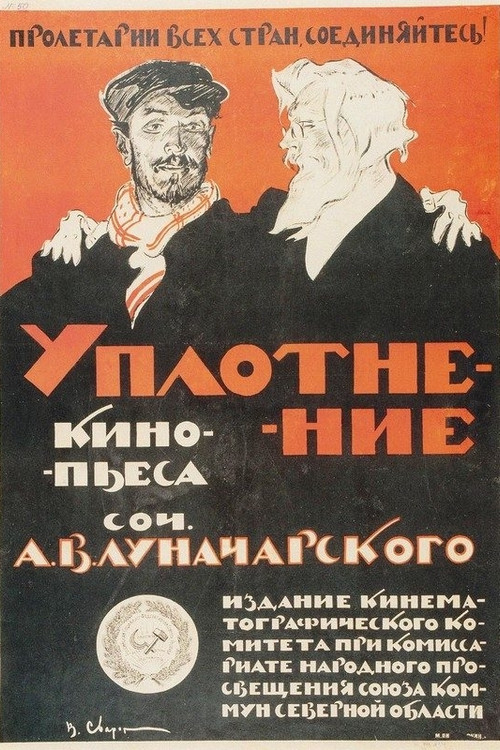
Uplotneniye 1918
Uplotneniye (1918) captures the social upheaval of post-Revolutionary Russia through the lens of everyday life transformed by radical change.
Director: Anatoli Dolinov
Cast
Frequently Asked Questions
What is Uplotneniye (1918) about?
The film follows a factory worker and his daughter who are moved from a basement to share a professor's spacious apartment during housing redistribution. As workers gather and lectures begin, romance develops between the professor's son and the worker's daughter, highlighting social changes in revolutionary Russia.
Who directed Uplotneniye?
Anatoli Dolinov directed this 1918 Soviet film, bringing his perspective to early post-revolutionary cinema during a pivotal moment in Russian film history.
Who stars in Uplotneniye?
The film features Ivan Lerskiy and Dmitry Leshchenko in key roles, with the romantic storyline centered around the professor's youngest son and the worker's daughter.
Is Uplotneniye (1918) worth watching?
As an unrated early Soviet film, Uplotneniye offers historical value for silent cinema enthusiasts. Its blend of romance and social commentary provides insight into post-revolutionary Russian society, making it worthwhile for those interested in film history.
How long is Uplotneniye?
The film runs for 56 minutes, a typical length for feature films of the silent era.
About Uplotneniye (1918) — Romance Amid Soviet Housing Reform
Uplotneniye (1918) captures the social upheaval of post-Revolutionary Russia through the lens of everyday life transformed by radical change. Directed by Anatoli Dolinov, this 56-minute silent drama follows a factory worker and his daughter who are relocated from a cramped basement to share living space in a professor's spacious apartment. As more workers arrive and the professor begins hosting popular lectures at the local club, the story explores themes of class mobility, education, and human connection during a time of great societal transformation.
The film blends romance, comedy, and drama to portray how political change reshapes personal relationships. When the professor's youngest son falls for the worker's daughter, their romance becomes a symbol of hope bridging different worlds. Dolinov's direction emphasizes the warmth of human interaction against the backdrop of Soviet restructuring, making this early Soviet film both historically significant and emotionally resonant for modern audiences interested in the era's cinema.