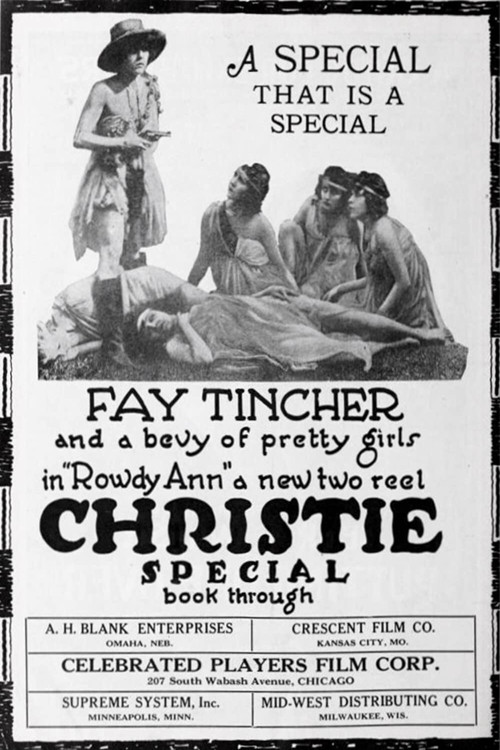
Rowdy Ann 1919
Rowdy Ann (1919) delivers a delightful blend of Western grit and comedic charm in this early silent film directed by Al Christie. The story follows Ann, a rough-and-tumble cowgirl whose fighting spirit gets her into trouble with Hank.
Director: Al Christie
Cast

Frequently Asked Questions
What is Rowdy Ann (1919) about?
Rowdy Ann follows a feisty cowgirl whose aggressive behavior leads to a fight with Hank. Her parents, hoping to reform her ways, send her to an Eastern college to learn proper ladylike behavior. The film explores her adjustment from rough frontier life to refined academic settings.
Who directed Rowdy Ann?
Al Christie directed Rowdy Ann, bringing his experience in comedy filmmaking to this Western short that blends frontier humor with social commentary.
Who stars in Rowdy Ann?
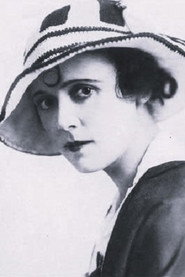
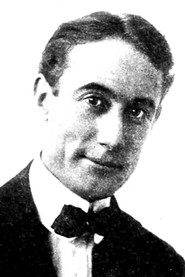
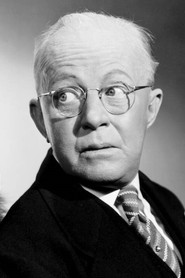
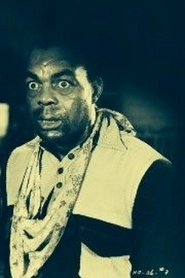
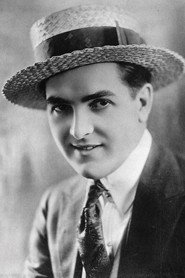
The film features Fay Tincher as Ann, with supporting performances from Eddie Barry, Katherine Lewis, Harry Depp, Al Haynes, and Patricia Palmer.
Is Rowdy Ann (1919) worth watching?
As an unrated silent Western comedy, Rowdy Ann offers historical value for film enthusiasts and those interested in early cinema. Its themes of gender roles and cultural adaptation remain relevant, making it an entertaining 21-minute glimpse into 1910s filmmaking.
How long is Rowdy Ann?
Rowdy Ann runs for 21 minutes, typical for short Western comedies of the silent era.
About Rowdy Ann (1919) — Cowgirl Goes East for College Adventure
Rowdy Ann (1919) delivers a delightful blend of Western grit and comedic charm in this early silent film directed by Al Christie. The story follows Ann, a rough-and-tumble cowgirl whose fighting spirit gets her into trouble with Hank. When her parents decide she needs refinement, they ship her off to an Eastern college in hopes of transforming her into a proper lady.
Starring Fay Tincher in the lead role alongside Eddie Barry, Katherine Lewis, and Harry Depp, this 21-minute Western comedy captures the cultural clash between frontier independence and Eastern gentility. The film's lighthearted tone and period setting make it a fascinating glimpse into early 20th-century American cinema, showcasing how gender expectations played out in both rural and urban environments.
With its brisk runtime and Christie's direction, Rowdy Ann offers a charming snapshot of silent-era filmmaking. The short Western comedy format was popular during this period, and the film's themes of transformation and identity continue to resonate with modern audiences interested in classic American cinema.