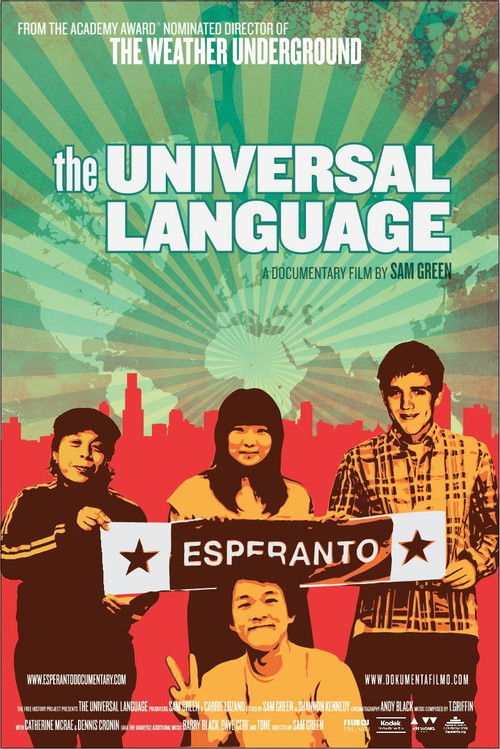
The Universal Language 2011
Dive into *The Universal Language (2011)* with Academy Award-nominated director Sam Green's concise yet evocative documentary on Esperanto, the artificial language born from a 19th-century Polish ophthalmologist's hopeful vision.
Director: Sam Green
Frequently Asked Questions
What is The Universal Language (2011) about?
This 31-minute documentary traces the fascinating history of Esperanto, an artificial language created in the late 1800s by a Polish doctor who believed it could unite humanity. The film follows Esperanto's journey from its origins to its peak in the early 20th century, exploring its ideals and the people who championed it as a tool for peace.
Who directed The Universal Language?
The film was directed by Sam Green, an Academy Award-nominated filmmaker known for his insightful documentaries, including *The Weather Underground*.
Who stars in The Universal Language?
Cast details are not listed for this documentary, which focuses on historical figures and Esperanto speakers rather than traditional actors.
Is The Universal Language (2011) worth watching?
While not widely rated, this short but compelling documentary offers a unique blend of history and optimism. Its themes of unity and language make it particularly relevant today, though casual viewers might find its niche subject matter hit-or-miss.
How long is The Universal Language?
The runtime is 31 minutes.
About The Universal Language (2011) — Esperanto's hopeful quest for global unity
Dive into *The Universal Language (2011)* with Academy Award-nominated director Sam Green's concise yet evocative documentary on Esperanto, the artificial language born from a 19th-century Polish ophthalmologist's hopeful vision. This 31-minute film explores how a simple idea—creating a universal tongue—could transcend borders, erase prejudice, and foster global unity. Through archival footage and personal narratives, Green paints a vivid portrait of Esperanto's rise during the early 20th century, when hundreds of thousands embraced it as a bridge across cultures. The film balances historical depth with a light, almost whimsical tone, inviting viewers to ponder whether language truly has the power to dismantle conflict.
As the title suggests, *The Universal Language* is more than a history lesson—it's a meditation on human connection. The documentary's charm lies in its quiet optimism, transforming a niche linguistic experiment into a symbol of humanity's enduring quest for harmony. Whether you're a language enthusiast or a curious filmgoer, Green's work offers a refreshing, thought-provoking glimpse into the intersection of culture, identity, and hope.