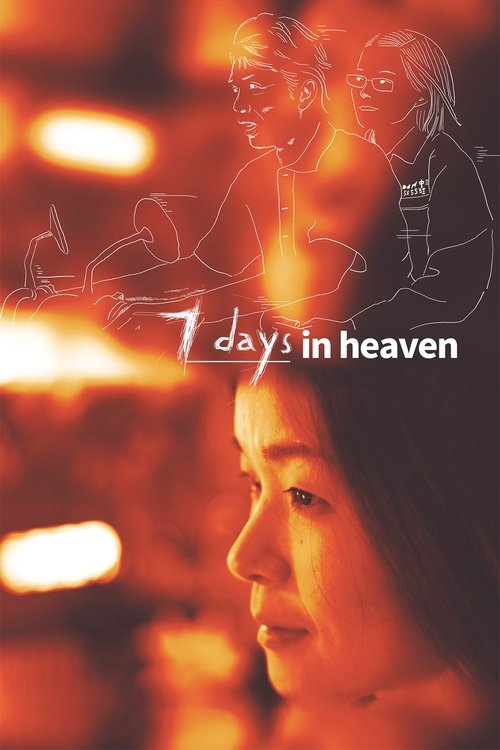
7 Days in Heaven 2010
Directed by Essay Liu, *7 Days in Heaven (2010)* is a poignant family drama that unfolds across seven days of Taoist mourning rituals following the passing of Lin Guo Yuan (Po Tai).
Director: Essay Liu
Cast





Frequently Asked Questions
What is 7 Days in Heaven (2010) about?
The film follows seven days of Taoist mourning rituals after the death of Lin Guo Yuan, focusing on how his family—including his children, nephew, and sister-in-law—navigate grief, tradition, and their evolving relationships. It's a quiet yet powerful exploration of loss and healing.
Who directed 7 Days in Heaven?
The film was directed by Essay Liu, a filmmaker known for crafting intimate, character-driven stories.
Who stars in 7 Days in Heaven?
The cast includes Garance Wang, Wu Pong-fong, Tai Bo, Winnie Chang, and Chen Tai-Hua, who deliver emotionally charged performances.
Is 7 Days in Heaven (2010) worth watching?
While not widely rated on IMDb, *7 Days in Heaven* is a touching drama for viewers who appreciate slow-burn character studies and cultural themes. Its gentle pacing and emotional depth may resonate with fans of family dramas like this one.
How long is 7 Days in Heaven?
The film runs for 97 minutes.
🎥 Trailer
About 7 Days in Heaven (2010) — A family's journey through loss and tradition
Directed by Essay Liu, *7 Days in Heaven (2010)* is a poignant family drama that unfolds across seven days of Taoist mourning rituals following the passing of Lin Guo Yuan (Po Tai). The film delicately explores grief, tradition, and familial bonds as it traces the emotional journey of his children, nephew, and sister-in-law. With a meditative pace and deeply human moments, the story captures the tension between duty and personal sorrow, all set against the backdrop of cultural rituals that shape their healing process.
Garance Wang, Wu Pong-fong, and Tai Bo lead a cast steeped in emotional authenticity, bringing to life a narrative that blends quiet introspection with quiet devastation. As the family grapples with loss, the film quietly examines themes of legacy, connection, and the ways tradition can both anchor and complicate grief. The result is a reflective, understated drama that lingers long after the credits roll.