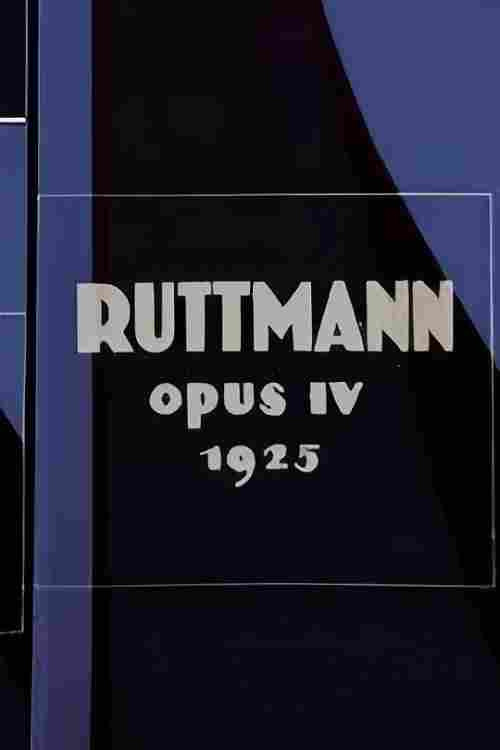
Opus IV 1925
Dive into the mesmerizing world of early abstract cinema with Opus IV (1925), a groundbreaking 4-minute animation crafted by the visionary German director Walter Ruttmann.
Director: Walter Ruttmann
Frequently Asked Questions
What is Opus IV (1925) about?
Opus IV is an abstract animation that transforms geometric shapes and vibrant colors into a rhythmic visual experience. It eschews traditional storytelling, instead inviting viewers to interpret the evolving patterns as a purely sensory journey through light and motion.
Who directed Opus IV?
Walter Ruttmann, a pioneer of German abstract cinema and experimental filmmaking, directed Opus IV.
Who stars in Opus IV?
Cast details for Opus IV (1925) are not publicly listed.
Is Opus IV (1925) worth watching?
While it's a niche piece, Opus IV (1925) is a fascinating artifact for fans of early cinema and abstract art. Its historical significance and hypnotic visuals make it a short but rewarding watch, especially for those interested in the evolution of animation and experimental film.
How long is Opus IV?
The runtime of Opus IV (1925) is approximately 4 minutes.
About Opus IV (1925) — The Silent Short That Redefined Abstract Animation
Dive into the mesmerizing world of early abstract cinema with Opus IV (1925), a groundbreaking 4-minute animation crafted by the visionary German director Walter Ruttmann. This experimental short film is a hypnotic dance of shapes, lines, and colors, moving to an unseen rhythm that feels both timeless and utterly modern. Unlike narrative-driven films of its era, Opus IV (1925) is a visual symphony—where geometric patterns pulse and evolve, creating an atmosphere that's both meditative and electrifying. Its minimalist yet dynamic aesthetic makes it a standout piece in the silent film era, appealing to fans of avant-garde art and cinema alike.
Often celebrated as one of the earliest examples of abstract animation, Opus IV showcases Ruttmann's mastery of form and movement. The film's lack of dialogue or characters allows the imagery to take center stage, evoking emotions through pure visual storytelling. Whether you're a cinephile, an art lover, or simply curious about the roots of experimental film, Opus IV (1925) offers a fleeting yet unforgettable experience that lingers long after the screen fades to black.