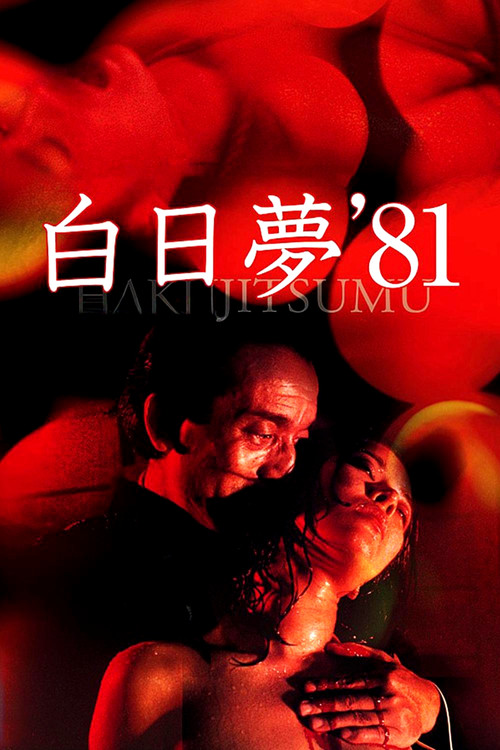
Day Dream 1981
Dive into the surreal and unsettling world of *Day Dream (1981)*, directed by the provocative Tetsuji Takechi. This haunting drama-fantasy-horror hybrid unfolds in a dentist's office, where an artist's imagination spirals into a nightmare of obsession and violence.
Director: Tetsuji Takechi
Cast

Frequently Asked Questions
What is Day Dream (1981) about?
*Day Dream* follows an artist whose mind spirals into a harrowing fantasy as he receives dental treatment. Under anesthesia, he envisions a woman enduring unspeakable horrors, forcing him—and the viewer—to confront the darker corners of desire and violence. The line between his imagination and reality dissolves entirely.
Who directed Day Dream?
Tetsuji Takechi directed *Day Dream (1981)*, known for his boundary-pushing work in Japanese cinema.
Who stars in Day Dream?
The film features Kyōko Aizome, Kei Satō, Takemi Katsushika, Saeda Kawaguchi, and Sengoro Shigeyama in pivotal roles.
Is Day Dream (1981) worth watching?
As an unrated but cult-classic Japanese horror-drama, *Day Dream* offers a unique blend of psychological tension and surreal imagery. Fans of avant-garde cinema or Takechi's work may find it a fascinating, if deeply unsettling, experience.
How long is Day Dream?
The runtime for *Day Dream (1981)* is 110 minutes.
About Day Dream (1981) — A Surreal Horror-Drama Unmasking Obsession and Fear
Dive into the surreal and unsettling world of *Day Dream (1981)*, directed by the provocative Tetsuji Takechi. This haunting drama-fantasy-horror hybrid unfolds in a dentist's office, where an artist's imagination spirals into a nightmare of obsession and violence. As he slips under anesthesia, his mind conjures vivid, disturbing visions of a woman subjected to brutal abuse, blurring the lines between fantasy and reality. With its eerie atmosphere and psychologically charged narrative, *Day Dream* challenges viewers to question the boundaries of desire and horror.
Blending psychological tension with surreal horror, *Day Dream (1981)* stars Kyōko Aizome and Kei Satō in roles that oscillate between allure and dread. The film's unsettling tone is amplified by its dark, dreamlike sequences, leaving audiences to ponder the fragility of the human psyche. A bold exploration of taboo themes, Takechi's work lingers like an unresolved nightmare, making it a cult favorite among fans of Japanese horror and avant-garde cinema.