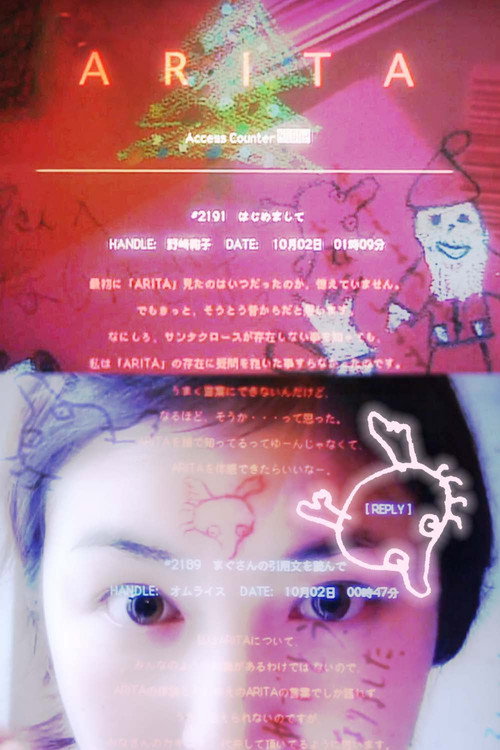
Arita 2002
Arita (2002) is a delicate, dreamlike short film by acclaimed Japanese director Shunji Iwai, offering a poetic exploration of childhood imagination and companionship through the eyes of Ryoko Hirosue.
Director: Shunji Iwai
Cast

Frequently Asked Questions
What is Arita (2002) about?
Arita follows a young girl who befriends a small, cheerful drawing that appears in her notebooks and artwork. As she matures, Arita becomes a silent companion, raising questions about the nature of friendship and the power of imagination in shaping childhood memories.
Who directed Arita?
Shunji Iwai, one of Japan's most celebrated and visually inventive directors, helmed Arita (2002). Known for his atmospheric storytelling, Iwai crafts a short film that feels like a whispered secret from the past.
Who stars in Arita?
The film stars Ryoko Hirosue in the lead role, bringing a quiet, introspective presence to the story of a girl and her imaginary friend.
Is Arita (2002) worth watching?
Though Arita is a brief 15-minute short, its poetic charm and emotional depth make it a standout. The film's gentle exploration of childhood wonder and solitude appeals to fans of nostalgic, thoughtfully crafted cinema.
How long is Arita?
Arita (2002) runs for approximately 15 minutes.
About Arita (2002) — A Dreamlike Short Film About Childhood Imagination
Arita (2002) is a delicate, dreamlike short film by acclaimed Japanese director Shunji Iwai, offering a poetic exploration of childhood imagination and companionship through the eyes of Ryoko Hirosue. The story unfolds in fleeting moments, centered on a young girl who discovers a tiny, smiling drawing named Arita—a silent, ever-present figure in her notebooks, sketches, and school supplies. As she grows, Arita becomes a cherished confidant, sparking quiet questions about friendship, memory, and the blurred lines between fantasy and reality.
Crafted with Iwai's signature visual lyricism, the film captures the whimsical innocence of youth, where a simple doodle can hold the weight of a first friend. Shot through Ryoko's perspective, Arita feels both deeply personal and universally relatable—a meditation on how we cling to symbols of comfort as we navigate the complexities of growing up.