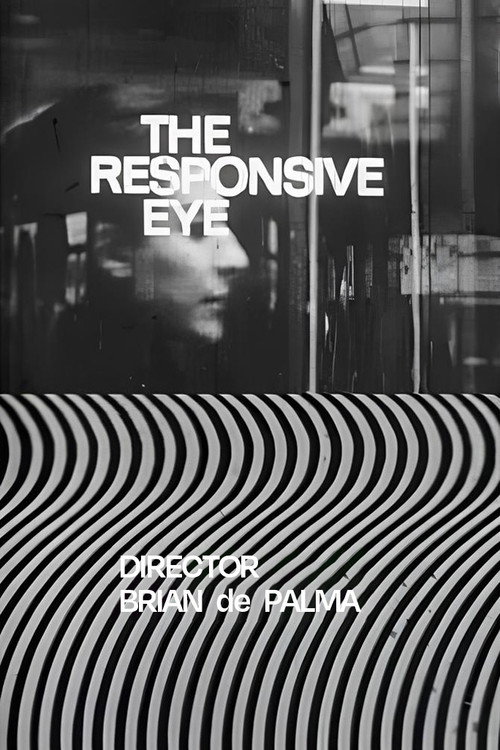
The Responsive Eye 1965
Dive into the vibrant world of mid-century modern art with *The Responsive Eye (1965)*, a captivating documentary short directed by Brian De Palma. This film captures the landmark 1965 Op Art exhibition at New York's Museum of Modern Art, curated by William C.
Director: Brian De Palma
Cast

Frequently Asked Questions
What is The Responsive Eye (1965) about?
*The Responsive Eye* documents the 1965 MoMA exhibition that launched Op Art into the public eye, showcasing artworks designed to play tricks on the viewer's perception. The film captures both the striking visuals and the audience's reactions, offering a glimpse into how this radical art movement captivated a generation.
Who directed The Responsive Eye?
*The Responsive Eye* was directed by Brian De Palma, whose early work in documentary filmmaking laid the groundwork for his later narrative successes.
Who stars in The Responsive Eye?
The film features key voices from the art world, including curator William Seitz, art historians Rudolf Arnheim and Irving H. Leopold, and artists like David Hockney, who contributed their insights to the exhibition.
Is The Responsive Eye (1965) worth watching?
As a 30-minute documentary, *The Responsive Eye* offers a concise yet rich exploration of Op Art's cultural impact. While unrated and niche, its historical significance and visual inventiveness make it a compelling watch for art enthusiasts and film buffs alike.
How long is The Responsive Eye?
*The Responsive Eye* is a short film with a runtime of 30 minutes.
About The Responsive Eye (1965) — Brian De Palma's Dazzling Snapshot of Op Art's Birth
Dive into the vibrant world of mid-century modern art with *The Responsive Eye (1965)*, a captivating documentary short directed by Brian De Palma. This film captures the landmark 1965 Op Art exhibition at New York's Museum of Modern Art, curated by William C. Seitz, which introduced the public to the mesmerizing visual language of optical illusion. Through De Palma's lens, viewers experience the hypnotic patterns, shifting perspectives, and dynamic interactions of artworks that challenged viewers' perceptions. The documentary doesn't just showcase the art—it immerses you in the buzz of the gallery, where attendees pause, ponder, and react to this groundbreaking movement.
*The Responsive Eye (1965)* is more than a historical record; it's a time capsule of the 1960s avant-garde, blending art theory with cinematic storytelling. With contributions from influential voices like art historians Rudolf Arnheim and critics like Irving H. Leopold, the film bridges the gap between academic discourse and public fascination. The Responsive Eye's legacy endures as a testament to how art can captivate, confuse, and inspire—making this short documentary a must-see for fans of experimental film and modernist art alike.