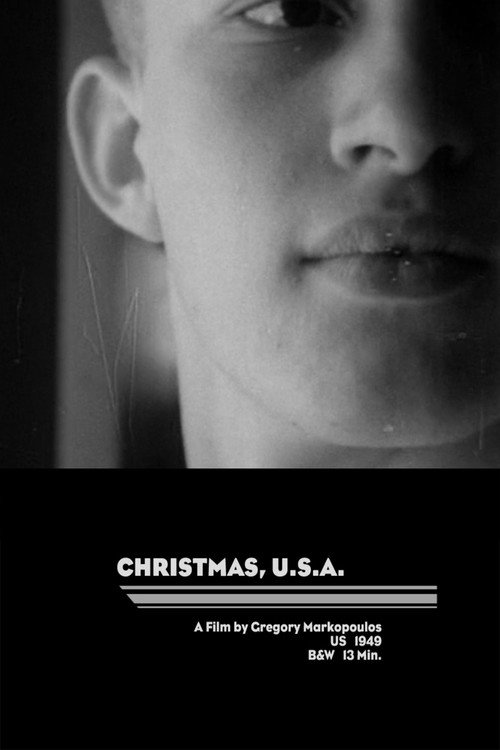
Christmas U.S.A. 1949
Christmas U.S.A. (1949) is a poetic short film directed by Gregory J. Markopoulos that captures a fleeting slice of mid-century American life with striking visual poetry.
Director: Gregory J. Markopoulos
Cast
Frequently Asked Questions
What is Christmas U.S.A. (1949) about?
Christmas U.S.A. (1949) is a 13-minute short film that captures a series of vignettes from mid-century American life, blending holiday nostalgia with everyday moments. From amusement park rides to quiet domestic routines, the film presents a collage of images that feel both ordinary and deeply poetic.
Who directed Christmas U.S.A.?
Christmas U.S.A. (1949) was directed by Gregory J. Markopoulos, a filmmaker known for his experimental and poetic approach to cinema.
Who stars in Christmas U.S.A.?
The main cast includes Mario Antonnini, Frederic Burae Davenport, John Markopoulos, Maria Markopoulos, Andrew Markopoulos, and Elaine Markopoulos.
Is Christmas U.S.A. (1949) worth watching?
While it's a short film with a runtime of just 13 minutes, Christmas U.S.A. (1949) offers a unique and atmospheric experience for fans of experimental cinema. Its poetic visuals and nostalgic tone make it a compelling watch for those who appreciate the artistry of early 20th-century filmmaking.
How long is Christmas U.S.A.?
Christmas U.S.A. (1949) has a runtime of 13 minutes.
About Christmas U.S.A. (1949) — Gregory J. Markopoulos' poetic short film of 1940s America
Christmas U.S.A. (1949) is a poetic short film directed by Gregory J. Markopoulos that captures a fleeting slice of mid-century American life with striking visual poetry. Spanning just 13 minutes, the movie unfolds through a series of disconnected yet vivid vignettes—amusement park rides spinning against the night sky, a solitary figure in a kimono pausing in a quiet forest to open a small keepsake box, and the quiet routines of a household preparing for the day. The film weaves together moments of joy, introspection, and domestic warmth, all bathed in the nostalgic glow of holiday nostalgia, even as the title hints at something more expansive and elusive.
Markopoulos crafts a dreamlike atmosphere where everyday scenes feel charged with deeper meaning. A man shaves and answers a phone call, while a teenager dresses for the day, their actions framed with a painterly stillness. Amidst the hum of midway rides at Cavalcade Worlds and the laughter of visitors at Little Harlem, the film quietly explores themes of transience, memory, and the quiet magic found in ordinary moments. It's a cinematic snapshot that lingers long after the credits roll, inviting viewers to reflect on the beauty hidden in the mundane.