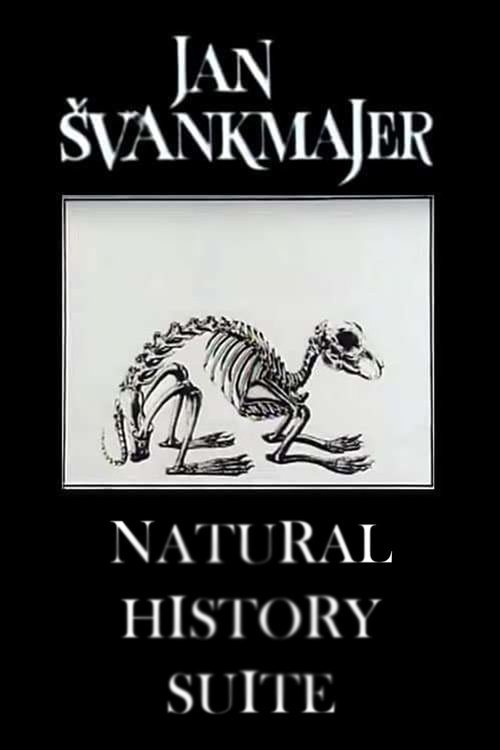
Natural History Suite 1967
Natural History Suite (1967) is a distinctive animated anthology that takes viewers on an artistic journey through the animal kingdom.
Director: Jan Švankmajer
Frequently Asked Questions
What is Natural History Suite (1967) about?
Natural History Suite is a short animated anthology featuring eight segments that explore different animal species through unique visual styles and musical accompaniments. Each chapter—from aquatic life to humans—is paired with a distinct musical genre that reflects the character of its subjects.
Who directed Natural History Suite?
The film was directed by Jan Švankmajer, the acclaimed Czech animator known for his surreal and experimental approach to stop-motion and mixed-media animation.
Who stars in Natural History Suite?
Cast information for Natural History Suite is currently unavailable.
Is Natural History Suite (1967) worth watching?
With its innovative blend of animation techniques and unconventional narrative structure, Natural History Suite offers a unique viewing experience that showcases Jan Švankmajer's artistic vision, making it worthwhile for fans of experimental cinema and animation artistry.
How long is Natural History Suite?
Natural History Suite has a runtime of 9 minutes.
Natural History Suite (1967): Švankmajer's Surreal Animated Bestiary
Natural History Suite (1967) is a distinctive animated anthology that takes viewers on an artistic journey through the animal kingdom. Created by renowned Czech filmmaker Jan Švankmajer, this nine-minute animation weaves together eight unique segments, each dedicated to different species and set to a matching musical style. From the foxtrot accompaniment of Aquatilia to the waltz finale of Homo, each chapter blends hand-drawn illustrations, photography, live animals, and skeletal animation to create a surreal natural history museum come to life.
This experimental animation film showcases Švankmajer's signature style of combining the macabre with the whimsical. The segments flow through aquatic life, insects, fish, reptiles, birds, mammals, primates, and finally humans, each movement reflecting the character of its subjects through dance-inspired musical scores. The film's collage approach creates an uncanny atmosphere that's both educational and deeply unsettling, challenging viewers' perceptions of nature and existence through Švankmajer's avant-garde lens.