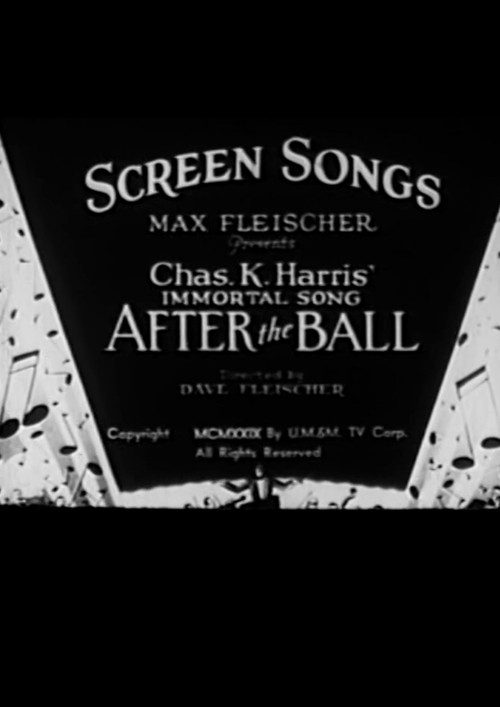
After the Ball 1929
Directed by animation pioneer Dave Fleischer in 1929, *After the Ball (1929)* transforms a beloved 19th-century ballad into a charming animated short that blends nostalgia with musical innovation.
Director: Dave Fleischer
Frequently Asked Questions
What is After the Ball (1929) about?
*After the Ball* pays homage to a 19th-century ballad by framing it as a respectful musical short. The film balances playful adaptation with sincere rendition, letting the song stand on its own without overbearing narration. Its brevity belies a thoughtful tribute to the era's communal music traditions.
Who directed After the Ball?
The film was directed by Dave Fleischer, a titan of early animation whose Fleischer Studios pioneered sync-sound techniques in cartoons.
Who stars in After the Ball?
Cast details for *After the Ball (1929)* are not listed, reflecting the era's production practices where animators and performers were often uncredited.
Is After the Ball (1929) worth watching?
For animation enthusiasts and fans of early sound films, *After the Ball* offers a fascinating glimpse into Fleischer Studios' experimentation. Its historical significance outweighs its brevity, making it a rewarding watch for those curious about cinema's evolution—even if it's not a groundbreaking spectacle.
How long is After the Ball?
The runtime for *After the Ball (1929)* is 5 minutes.
About After the Ball (1929) — Vintage Animation Classic from Dave Fleischer
Directed by animation pioneer Dave Fleischer in 1929, *After the Ball (1929)* transforms a beloved 19th-century ballad into a charming animated short that blends nostalgia with musical innovation. While the original song's reprise is playfully adapted, the film opens with respect for the tune itself, featuring an unseen Irish tenor's dignified introduction before inviting the audience to join in. The brief runtime—just five minutes—packs surprising warmth, capturing the essence of an era when communal singing bridged social divides.
This early Fleischer Studios work occupies a unique place in animation history, not for groundbreaking visuals but for its heartfelt approach to music and storytelling. The black-and-white aesthetic and gentle pacing create an intimate atmosphere, where the simplicity of the animation serves only to spotlight the song's emotional pull. Though modest in scale, *After the Ball* endures as a snapshot of how early animators experimented with sound and subject matter in cinema's transition to the talkies era.