
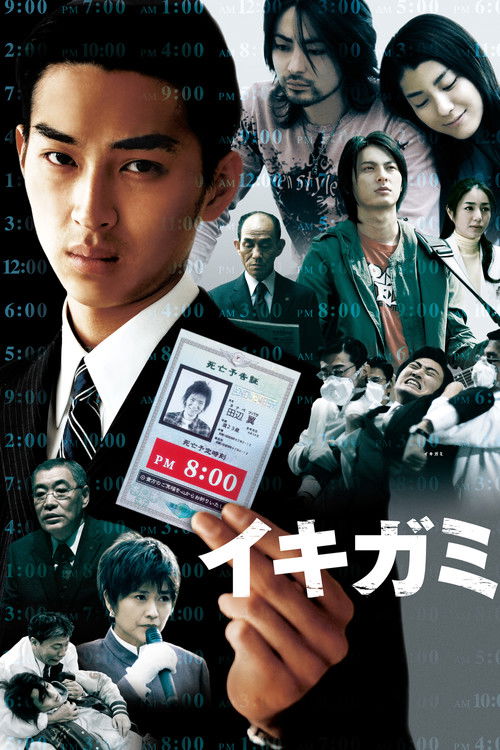
Ikigami: The Ultimate Limit 2008
Directed by Tomoyuki Takimoto, *Ikigami: The Ultimate Limit* (2008) plunges viewers into a chillingly plausible dystopian Japan where the government sends "ikigami"—official notices declaring citizens have just 24 hours left to live.
Director: Tomoyuki Takimoto
Cast

Shota Matsuda
Kengo Fujimoto

Takashi Tsukamoto
Hidekazu Morio

Riko Narumi
Sakura Iizuka

Takayuki Yamada
Satoshi Iizuka

Akira Emoto
Counselor

Yuta Kanai
Tsubasa Tanabe

Kazuma Sano
Naoki Takizawa

Takashi Sasano
Chief Ishii

Gekidan Hitori
Shimada

Sansei Shiomi
Nobuhiko Takizawa
Frequently Asked Questions
What is Ikigami: The Ultimate Limit (2008) about?
Set in a dystopian Japan, the film follows Kyohei Sakamoto, a civil servant who delivers "ikigami"—official notices informing citizens of their impending death within 24 hours. The story explores his emotional journey and the lives of those receiving the messages, all under the oppressive shadow of government control.
Who directed Ikigami: The Ultimate Limit?
Tomoyuki Takimoto directed *Ikigami: The Ultimate Limit* (2008), blending psychological drama with dystopian themes in his feature debut.
Who stars in Ikigami: The Ultimate Limit?
The film stars Shota Matsuda as Kyohei Sakamoto, alongside Takashi Tsukamoto, Riko Narumi, Takayuki Yamada, and Akira Emoto in pivotal roles.
Is Ikigami: The Ultimate Limit (2008) worth watching?
*Ikigami* is a thought-provoking drama that lingers in your mind, thanks to its bold premise and strong performances. While not for those seeking light entertainment, its exploration of mortality and systemic control offers a gripping, if unsettling, viewing experience.
How long is Ikigami: The Ultimate Limit?
The runtime of *Ikigami: The Ultimate Limit* is 133 minutes.
🎥 Trailer
About Ikigami: The Ultimate Limit (2008) — Dystopian Japan's chilling 24-hour countdown
Directed by Tomoyuki Takimoto, *Ikigami: The Ultimate Limit* (2008) plunges viewers into a chillingly plausible dystopian Japan where the government sends "ikigami"—official notices declaring citizens have just 24 hours left to live. The film orbits the quiet horror of Kyohei Sakamoto (Shota Matsuda), a low-level bureaucrat tasked with delivering these life-ending messages, each delivery forcing him to confront the fragility of existence and the arbitrary power of state control. As the story unfolds, the emotional weight of each encounter strips away the sterile efficiency of the system, revealing raw humanity beneath bureaucratic detachment.
The atmosphere crackles with tension, blending the clinical precision of a procedural with the raw emotional punch of a character drama. Takimoto crafts a world where duty clashes with empathy, and every second counts, both for the messenger and the marked. The film's haunting premise lingers long after the credits roll, challenging audiences to question how far society will go to enforce compliance—and what it truly means to live meaningfully in the face of inevitability.