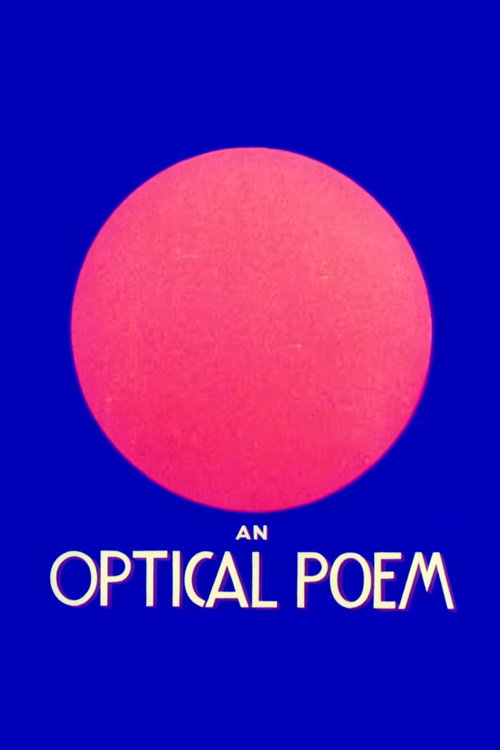
An Optical Poem 1938
Oskar Fischinger's *An Optical Poem (1938)* is a mesmerizing seven-minute animation that transforms Liszt's *Second Hungarian Rhapsody* into a vibrant symphony of geometric shapes.
Director: Oskar Fischinger
Frequently Asked Questions
What is *An Optical Poem (1938)* about?
This short film is a visual translation of Liszt's *Second Hungarian Rhapsody*, where abstract shapes dance in sync with the music. It's an experiment in pure animation, stripping away narrative to focus on rhythm, color, and movement as emotional expression.
Who directed *An Optical Poem*?
Director information is not available.
Who stars in *An Optical Poem*?
The main cast includes uncredited animators and designers, as the film relies entirely on geometric shapes rather than performers.
Is *An Optical Poem (1938)* worth watching?
Though unrated on IMDb, its historical significance as a pioneer of abstract animation makes it a fascinating watch for film and art enthusiasts. Its brevity and experimental nature reward curious viewers seeking something outside traditional cinema.
How long is *An Optical Poem*?
The runtime is listed as 7 minutes.
About An Optical Poem (1938) — How Abstract Animation Meets Classical Music
Oskar Fischinger's *An Optical Poem (1938)* is a mesmerizing seven-minute animation that transforms Liszt's *Second Hungarian Rhapsody* into a vibrant symphony of geometric shapes. Circles, squares, and triangles pulse in rhythm with the music, creating a hypnotic dance of color and motion against shifting backgrounds. The film strips away narrative, instead immersing viewers in a visual interpretation where every movement feels like a heartbeat, syncing the abstract with the emotional. Its two-dimensional simplicity belies a rich experimental boldness, making it a landmark in early abstract animation.
The result is both playful and profound—where a sea of red circles on a blue canvas gives way to white rectangles gliding across light blue squares. Fischinger's work doesn't just *illustrate* music; it *embodies* it, inviting audiences to lose themselves in the interplay of form and sound. With no characters or plot, *An Optical Poem* proves that cinema can be pure sensation, a fleeting but unforgettable experience that lingers like a half-remembered dream.