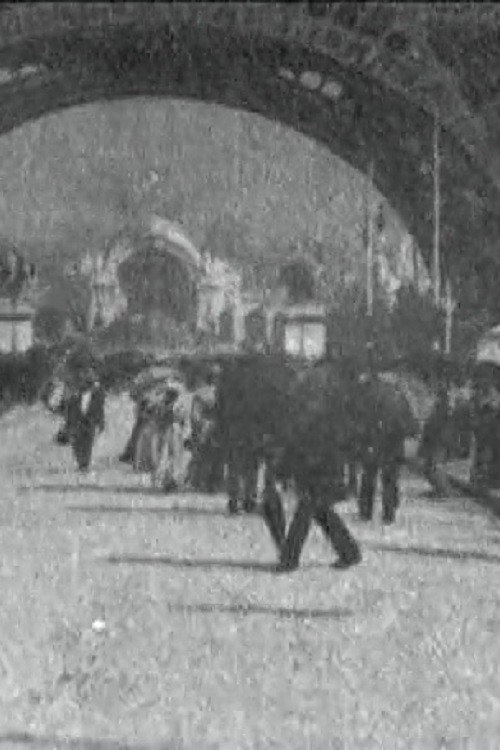
Champs de Mars 1900
Champs de Mars (1900) offers a brief but captivating glimpse into early 20th century Paris through the lens of pioneering filmmaker James H. White.
Director: James H. White
Frequently Asked Questions
What is Champs de Mars (1900) about?
This early documentary film takes viewers on a brief tour of the Champs de Mars avenue in Paris, showcasing its notable buildings before concluding with a close-up view of the Eiffel Tower's base, with the Trocadero Palace visible in the background.
Who directed Champs de Mars?
The film was directed by James H. White, an early filmmaker known for his work in documentary and actuality films during cinema's formative years.
Who stars in Champs de Mars?
The main cast is not documented, as this early documentary focuses on architectural subjects rather than human performers.
Is Champs de Mars (1900) worth watching?
While unrated on IMDb, this one-minute documentary holds significant historical value as an early example of actuality filmmaking, making it worthwhile for silent film enthusiasts and those interested in early 20th century Paris.
How long is Champs de Mars?
The runtime is 1 minute.
About Champs de Mars (1900) — Early Paris Documentary Film
Champs de Mars (1900) offers a brief but captivating glimpse into early 20th century Paris through the lens of pioneering filmmaker James H. White. This one-minute documentary captures the architectural grandeur of one of the city's most famous avenues, showcasing the prominent buildings that defined the landscape over a century ago. The film concludes with an intimate view of the Eiffel Tower's base, majestically framed against the backdrop of the Trocadero Palace. As a historical artifact of cinema's earliest days, it provides invaluable visual documentation of Parisian urban development during the Belle Époque era. The short runtime doesn't diminish its cultural significance, offering viewers a rare opportunity to witness how these iconic landmarks appeared in their original context. This early documentary represents the experimental spirit of filmmaking at the turn of the century, when directors were discovering new ways to capture and preserve real-world imagery.
Though the cast remains unknown, the true stars are the architectural marvels themselves. The film's documentary style and brief duration make it an intriguing curiosity for silent film enthusiasts and historians alike. Its preservation allows modern audiences to experience a moment in time when the Eiffel Tower was still relatively new and the Trocadero Palace stood as a symbol of Parisian elegance. Champs de Mars (1900) serves as both entertainment and historical record, bridging the gap between photography and motion pictures.