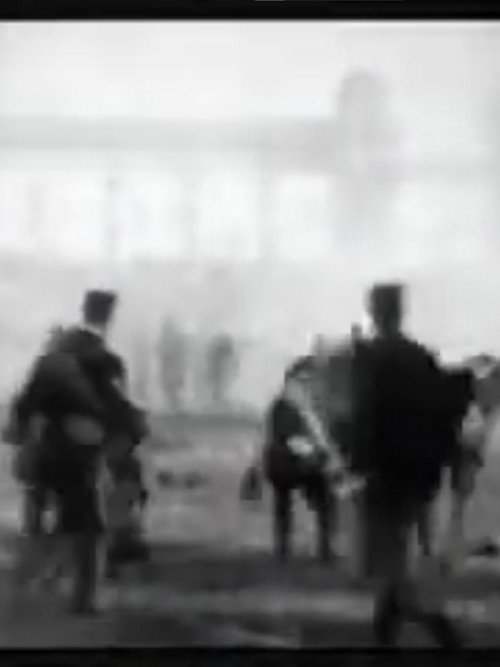
Sham Battle at the Pan-American Exposition 1901
Step back to the close of the 1901 Pan-American Exposition in Buffalo, New York, and relive a meticulously staged military spectacle captured on film.
Frequently Asked Questions
What is Sham Battle at the Pan-American Exposition (1901) about?
This short documentary captures a staged military reenactment held on the final day of the 1901 Pan-American Exposition in Buffalo, New York. Filmed at the Exposition's Stadium, the sequence features soldiers performing drills, rifle volleys, and tactical formations before a large audience, blending pageantry with public entertainment.
Who directed Sham Battle at the Pan-American Exposition?
Director information is not available.
Who stars in Sham Battle at the Pan-American Exposition?
The cast is not listed, as this early documentary preserves an anonymous military ensemble in period uniforms.
Is Sham Battle at the Pan-American Exposition (1901) worth watching?
As a five-minute historical curiosity, Sham Battle at the Pan-American Exposition offers a rare glimpse into early 20th-century public spectacle and military pageantry. While not a narrative film, its cultural significance as one of the earliest surviving films tied to the Pan-American Exposition makes it a compelling watch for silent film or history enthusiasts.
How long is Sham Battle at the Pan-American Exposition?
The film runs for 5 minutes.
🎥 Trailer
Sham Battle at the Pan-American Exposition (1901): Early Cinema's Patriotic Reenactment — Full Movie Info
Step back to the close of the 1901 Pan-American Exposition in Buffalo, New York, and relive a meticulously staged military spectacle captured on film.
Sham Battle at the Pan-American Exposition (1901) is a fleeting yet fascinating glimpse into early cinema's fascination with pageantry and patriotism. This five-minute documentary transports viewers to a crisp autumn afternoon when soldiers clad in period uniforms drilled and paraded before a grandstand packed with onlookers. Against the ornate backdrop of the Exposition's neoclassical Stadium, the reenactment of a mid-19th-century battle offered spectators a taste of history brought to life—complete with marching bands, rifle volleys, and dramatic formations. The film is less a historical record than a cinematic snapshot of the era's love for spectacle and civic pride.
As one of the earliest surviving motion pictures tied to the Pan-American Exposition, this short documentary stands as both a historical curiosity and a testament to the power of early film to preserve moments of public celebration.