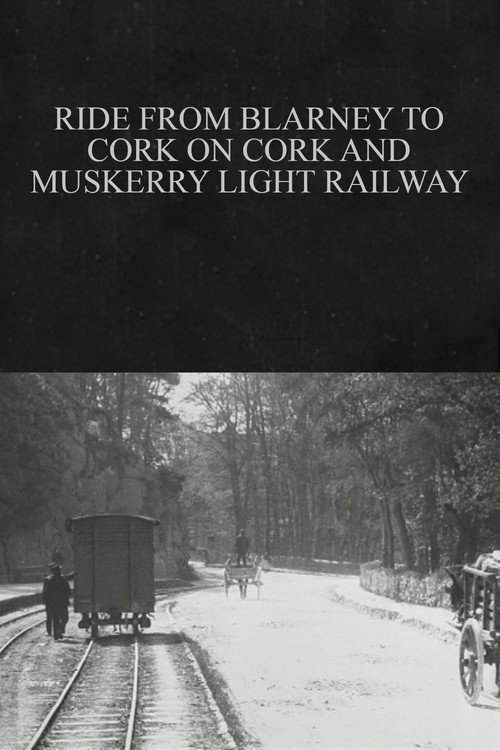
Ride from Blarney to Cork on Cork and Muskerry Light Railway 1902
This brief yet captivating 1902 documentary offers a rare glimpse into early 20th century Ireland through the lens of the Cork and Muskerry Light Railway.
Frequently Asked Questions
What is Ride from Blarney to Cork on Cork and Muskerry Light Railway (1902) about?
This early documentary follows a train journey along the Cork and Muskerry Light Railway, capturing panoramic views of Blarney Castle, the Colthurst estate, and scenic stops through County Cork including Leemount and Carrigrohane stations.
Who directed Ride from Blarney to Cork on Cork and Muskerry Light Railway?
Director information is not available for this early 20th century documentary.
Who stars in Ride from Blarney to Cork on Cork and Muskerry Light Railway?
Cast details are not recorded for this historical documentary film.
Is Ride from Blarney to Cork on Cork and Muskerry Light Railway (1902) worth watching?
While unrated on IMDb, this documentary holds significant historical value as an early example of travel filmmaking. Its brief runtime and authentic Edwardian-era footage make it worthwhile for cinema history enthusiasts.
How long is Ride from Blarney to Cork on Cork and Muskerry Light Railway?
The film runs for 2 minutes.
Ride from Blarney to Cork on Cork and Muskerry Light Railway (1902) — Historic Irish Railway Documentary
This brief yet captivating 1902 documentary offers a rare glimpse into early 20th century Ireland through the lens of the Cork and Muskerry Light Railway. The two-minute film opens with sweeping panoramic views of the Colthurst estate and the iconic Blarney Castle, which had already become a beloved tourist destination during the Edwardian period. Audiences are then taken on a scenic journey through County Cork, passing through Leemount and Carrigrohane stations along the way.
Shot in the lush greenery of late spring, this historical film was specially created for the 1902 Cork International Exhibition, providing visitors with an authentic moving postcard of rural Irish life. Though the director and cast remain unidentified, the documentary stands as an important piece of cinematic history, preserving the memory of a light railway system that would eventually close in 1934. The film's atmospheric quality and pioneering cinematography make it a fascinating artifact for those interested in early documentary filmmaking and Irish transportation heritage.
For viewers seeking to stream or download classic historical footage, this short film provides an intimate window into a bygone era, showcasing both architectural landmarks and the charming countryside that defined County Cork over a century ago.