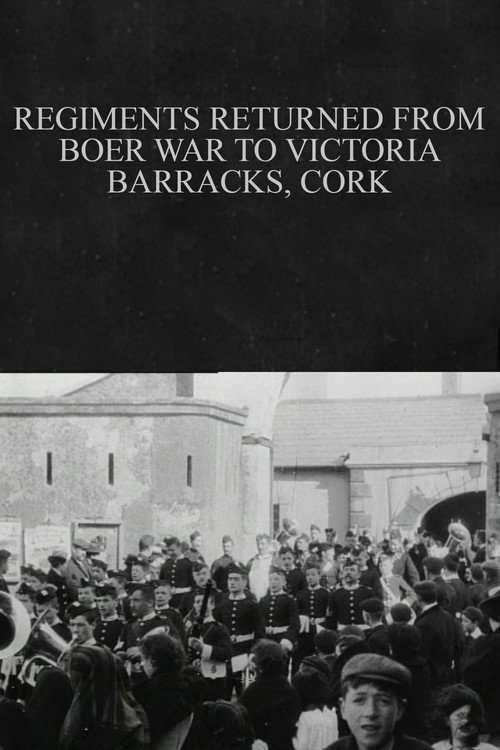
Regiments Returned from Boer War to Victoria Barracks, Cork 1902
This rare 1902 documentary captures a fleeting yet pivotal moment in Irish and colonial history as weary Irish soldiers return from the Boer War to Victoria Barracks in Cork.
Frequently Asked Questions
What is Regiments Returned from Boer War to Victoria Barracks, Cork (1902) about?
This 1902 silent documentary captures Irish soldiers returning from the Boer War to Victoria Barracks in Cork, offering a stark look at their fatigue and the barracks' transition from a British symbol to an Irish one. The film highlights the soldiers' role in colonial conflicts and Ireland's evolving identity.
Who directed Regiments Returned from Boer War to Victoria Barracks, Cork?
Director information is not available.
Who stars in Regiments Returned from Boer War to Victoria Barracks, Cork?
The documentary does not feature credited actors; the stars are the anonymous soldiers and the historic Victoria Barracks itself.
Is Regiments Returned from Boer War to Victoria Barracks, Cork (1902) worth watching?
While the film is short and unrated, its historical significance makes it a must-watch for history enthusiasts. The silent footage provides a unique window into Ireland's colonial past and the Boer War's local impact.
How long is Regiments Returned from Boer War to Victoria Barracks, Cork?
The runtime is approximately 2 minutes.
Regiments Returned from Boer War to Victoria Barracks, Cork (1902): A Rare Snapshot of Irish History
This rare 1902 documentary captures a fleeting yet pivotal moment in Irish and colonial history as weary Irish soldiers return from the Boer War to Victoria Barracks in Cork. Filmed in black-and-white, the short clip documents their arrival with a mix of exhaustion and relief, offering a glimpse into the post-conflict era and Ireland's complex role in the British Empire. The barracks, originally named after Queen Victoria in 1849, later became Collins Barracks, symbolizing Ireland's shift toward independence. The film's historical weight lies in its unspoken tensions—Irish soldiers' divided loyalties and the barracks' evolving identity amid a changing nation.
Though brief, this two-minute silent film is a treasure trove for history buffs and film enthusiasts alike. It's a visual time capsule that bridges the gap between colonial rule and the revolutionary period, all while showcasing early documentary techniques. The grainy footage, devoid of narration, lets the soldiers' expressions tell the story—a testament to resilience and the quiet aftershocks of war.