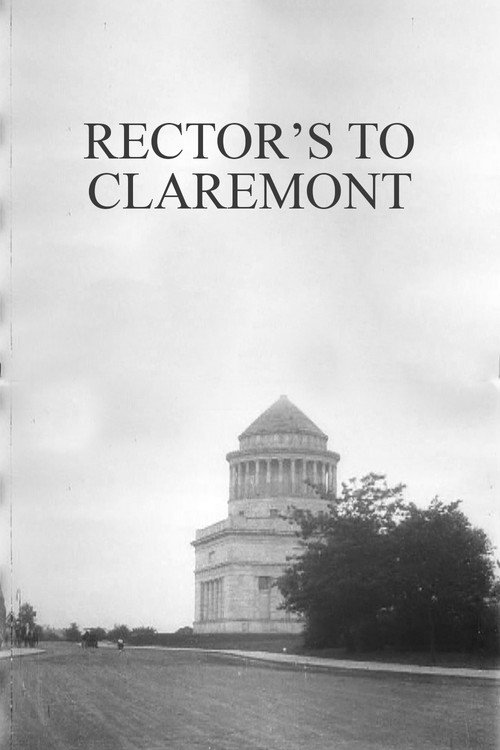
Rector's to Claremont 1904
Dive into the whimsical world of early cinema with *Rector's to Claremont (1904)*, a delightful short comedy directed by Edwin S. Porter, a pioneer of American filmmaking.
Director: Edwin S. Porter
Frequently Asked Questions
What is Rector's to Claremont (1904) about?
The film follows a diner who misses his departing carriage and must sprint through the streets to catch up. A simple premise, but Edwin S. Porter turns it into a playful chase scene packed with early cinematic charm.
Who directed Rector's to Claremont?
Edwin S. Porter, the legendary American filmmaker behind groundbreaking works like *The Great Train Robbery*.
Who stars in Rector's to Claremont?
Cast details for this 1904 short are unfortunately not listed, but the film features a group of anonymous diners and a determined pedestrian as its main characters.
Is Rector's to Claremont (1904) worth watching?
With its short runtime and lighthearted premise, *Rector's to Claremont* is a charming relic for silent film enthusiasts and history buffs. While it may not dazzle modern audiences, it's a fun peek at early comedic storytelling.
How long is Rector's to Claremont?
The film runs for approximately 3 minutes.
About Rector's to Claremont (1904) — The Classic Silent Comedy Everyone Should See
Dive into the whimsical world of early cinema with *Rector's to Claremont (1904)*, a delightful short comedy directed by Edwin S. Porter, a pioneer of American filmmaking. This three-minute silent gem captures the chaos of a bustling era when horse-drawn carriages and city streets set the stage for comedic mishaps. The plot follows a hapless diner who, left behind by his departing carriage, embarks on a frantic foot-chase through New York's lively neighborhoods. With no dialogue, Porter's film relies on slapstick timing and visual storytelling, reflecting the playful spirit of turn-of-the-century entertainment. The film's lighthearted tone and rapid pacing offer a glimpse into the birth of cinematic humor.
Though modest in length, *Rector's to Claremont (1904)* stands as a testament to the ingenuity of silent-era filmmakers. Its simplicity belies the charm of early moviemaking, where every frame counted. For fans of silent comedy or film history, this short is a must-watch—a quick, joyful glimpse into the past that still tickles the funny bone over a century later.