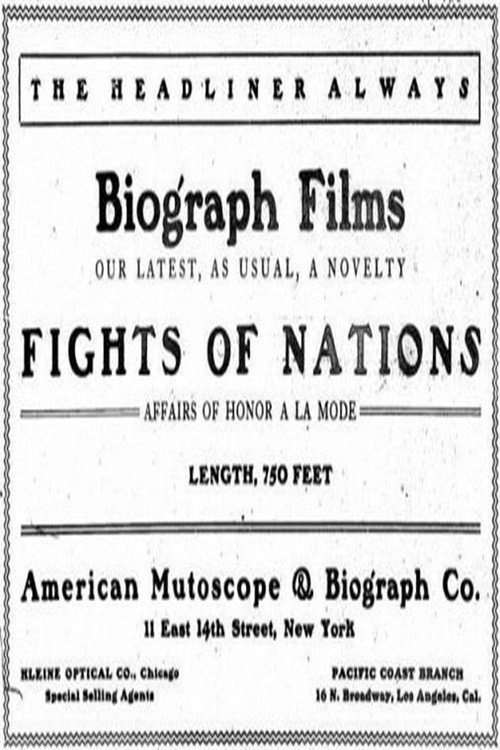
Fights of Nations 1907
Fights of Nations (1907) is a 4-minute silent short film that delivers a series of exaggerated slapstick vignettes, each playing into the era's crude racial stereotypes.
Frequently Asked Questions
What is Fights of Nations (1907) about?
This silent short film presents a series of slapstick vignettes featuring exaggerated racial stereotypes, including murderous Mexicans, conniving Jews, and brawling Irish characters. The chaotic narrative leaves viewers to interpret whether it's offensive parody or unintentionally revealing glimpse into early 20th-century attitudes.
Who directed Fights of Nations?
Director information is not available for Fights of Nations (1907).
Who stars in Fights of Nations?
The film's cast remains largely unknown, though it features a range of caricatured figures representing different ethnic and national stereotypes of the era.
Is Fights of Nations (1907) worth watching?
As a historical curiosity, Fights of Nations (1907) offers insight into early cinema's problematic stereotypes, but its value depends on one's tolerance for offensive humor. With no IMDb rating and a runtime of just 4 minutes, it's more of an academic footnote than a must-see film.
How long is Fights of Nations?
Fights of Nations (1907) runs for 4 minutes.
🎥 Trailer
About Fights of Nations (1907): Early Cinema's Most Questionable Stereotypes
Fights of Nations (1907) is a 4-minute silent short film that delivers a series of exaggerated slapstick vignettes, each playing into the era's crude racial stereotypes. Directed by an unknown filmmaker, this black-and-white drama presents a chaotic parade of caricatures—murderous Mexicans, scheming Jews, brawling Irishmen, and bloodthirsty Scotsmen—alongside an Indian figure and a portrayal of Uncle Sam. The film's tone oscillates between absurd comedy and unsettling provocation, leaving audiences to question its intent.
Is it a blunt parody of early 20th-century attitudes, or simply a product of its time? The final scene, where most characters (except a group of dancing African Americans) unite in labor, adds another layer of ambiguity. Fights of Nations (1907) offers a fascinating, if cringe-inducing, glimpse into the cinematic stereotypes that once dominated early film culture.