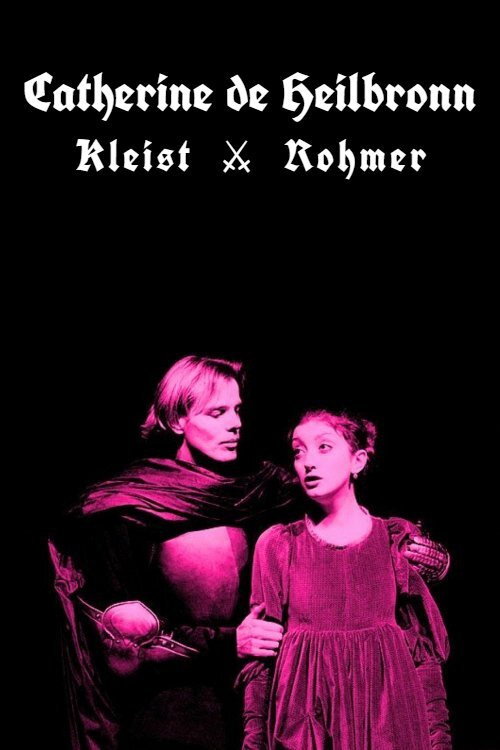
Catherine de Heilbronn 1980
Éric Rohmer's historical drama *Catherine de Heilbronn (1980)* unfolds against the dark, superstitious backdrop of medieval Europe, where whispers of witchcraft and the supernatural cast long shadows over truth and justice.
Director: Éric Rohmer
Cast





Frequently Asked Questions
What is *Catherine de Heilbronn (1980)* about?
*Catherine de Heilbronn* follows the earl Wetter von Stahl as he investigates accusations of witchcraft against a young woman whose behavior seems unnaturally possessed. Set in the Middle Ages, the film examines themes of suspicion, justice, and the supernatural, as von Stahl's interrogation uncovers deeper layers of truth and deception.
Who directed *Catherine de Heilbronn*?
The film was directed by Éric Rohmer, the acclaimed French filmmaker known for his perceptive and humanistic storytelling.
Who stars in *Catherine de Heilbronn*?
The cast includes Jean Boissery, Daniel Tarrare, Gérard Falconetti, Jean-Marc Bory, and Pascal Greggory in key roles.
Is *Catherine de Heilbronn (1980)* worth watching?
With its atmospheric storytelling and Rohmer's signature depth, *Catherine de Heilbronn* offers a rewarding experience for fans of historical dramas and psychological mysteries. While it may not be fast-paced, its exploration of medieval superstitions and moral dilemmas makes it a compelling watch.
How long is *Catherine de Heilbronn*?
The film runs for 138 minutes.
About Catherine de Heilbronn (1980) — Éric Rohmer's medieval witchcraft mystery explored
Éric Rohmer's historical drama *Catherine de Heilbronn (1980)* unfolds against the dark, superstitious backdrop of medieval Europe, where whispers of witchcraft and the supernatural cast long shadows over truth and justice. The story follows the earl Wetter von Stahl, accused of bewitching Catherine, the blacksmith's daughter, whose strange behavior during interrogation hints at something beyond natural explanation. Rohmer, known for his keen exploration of human motives, crafts a tale where suspicion and power collide, blending psychological tension with the eerie atmosphere of an era steeped in folklore and fear.
As von Stahl takes charge of Catherine's interrogation, the film delves into themes of innocence, coercion, and the dangerous allure of the occult. With a restrained yet gripping approach, Rohmer transforms a historical setting into a stage for moral ambiguity, where every glance and whispered word could hold the key to unraveling—or deepening—the mystery. The result is a compelling, thought-provoking drama that lingers in the mind long after the final scene.