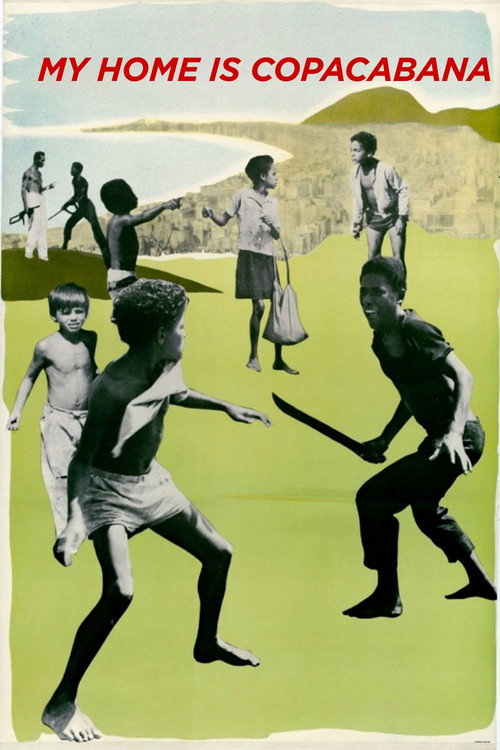
My Home Is Copacabana 1965
Directed by Swedish filmmaker Arne Sucksdorff, *My Home Is Copacabana* (1965) paints a raw and moving portrait of four street children navigating the harsh realities of survival in Rio de Janeiro's favelas.
Director: Arne Sucksdorff
Cast




Frequently Asked Questions
What is *My Home Is Copabana* (1965) about?
The film follows four homeless children in Rio de Janeiro's slums who hustle for money and food while dodging danger. When one of them falls gravely ill, he faces a difficult decision about where to seek help.
Who directed *My Home Is Copacabana*?
The film was directed by Arne Sucksdorff, a celebrated Swedish filmmaker known for his documentary-style dramas.
Who stars in *My Home Is Copacabana*?
The cast includes Cosme dos Santos, Dirce Migliaccio, Flávio Migliaccio, Antônio Pitanga, and Joel Barcellos.
Is *My Home Is Copacabana* (1965) worth watching?
For fans of socially conscious dramas and gritty character studies, the film offers a compelling and emotionally charged experience. While it's not rated on IMDb, its Cannes selection and Sucksdorff's direction make it a standout in 1960s cinema.
How long is *My Home Is Copacabana*?
The film runs for 85 minutes.
About My Home Is Copacabana (1965) — A Gritty Tale of Street Children in Rio's Favelas
Directed by Swedish filmmaker Arne Sucksdorff, *My Home Is Copacabana* (1965) paints a raw and moving portrait of four street children navigating the harsh realities of survival in Rio de Janeiro's favelas. Through the eyes of Jorginho, Rico, Lici, and Paulinho, the film exposes the daily struggles of poverty, crime, and resilience. Their world is one of hustling for change, scavenging scraps, and evading authority—until Rico's failing health forces a heartbreaking choice between the streets and the grim confines of an institution he once escaped.
Atmospheric and unflinching, Sucksdorff's drama blends adventure with poignant drama, capturing the contrast between the children's dreams and their brutal surroundings. With a selection at the 1965 Cannes Film Festival, the film remains a striking testament to the human spirit under adversity.