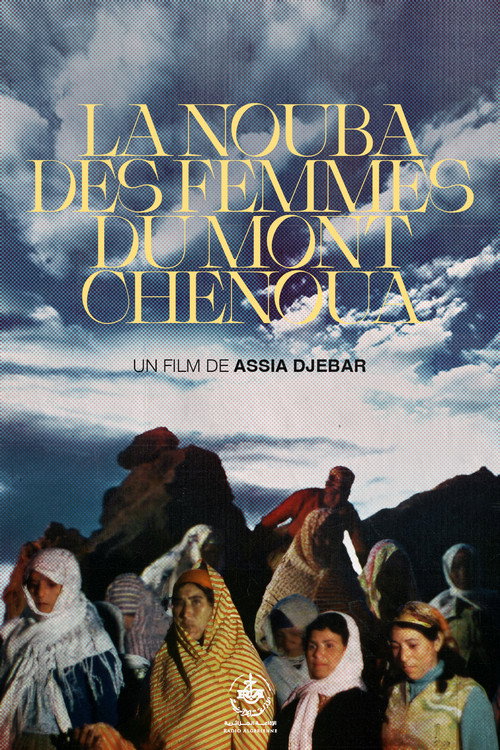
The Nouba of the Women of Mount Chenoua 1978
Assia Djebar's poetic masterpiece *The Nouba of the Women of Mount Chenoua* (1978) weaves together history, memory, and the lingering scars of colonialism through a hauntingly lyrical lens.
Director: Assia Djebar
Frequently Asked Questions
What is *The Nouba of the Women of Mount Chenoua* (1978) about?
The film follows Lila, an Algerian woman returning to her homeland after 15 years abroad, as she confronts the psychological and cultural echoes of war and independence. Through fragmented memories and encounters, she explores themes of identity, displacement, and the resilience of women in a changing nation.
Who directed *The Nouba of the Women of Mount Chenoua*?
The film was directed by Assia Djebar, a groundbreaking Algerian writer and filmmaker whose work often examines the intersections of history, gender, and post-colonial life.
Who stars in *The Nouba of the Women of Mount Chenoua*?
Cast details for this 1978 film are not officially listed, reflecting its more observational and documentary-driven approach.
Is *The Nouba of the Women of Mount Chenoua* (1978) worth watching?
With its unique blend of drama and documentary, the film offers a profound, visually poetic perspective on post-colonial identity. While it may not appeal to everyone due to its abstract style, it's a must-see for fans of arthouse cinema and Algerian history.
How long is *The Nouba of the Women of Mount Chenoua*?
The film runs for 115 minutes (1 hour and 55 minutes).
About The Nouba of the Women of Mount Chenoua (1978) — A poetic journey through post-colonial Algeria's untold stories
Assia Djebar's poetic masterpiece *The Nouba of the Women of Mount Chenoua* (1978) weaves together history, memory, and the lingering scars of colonialism through a hauntingly lyrical lens. Blending documentary realism with intimate storytelling, the film traces Lila's return to her homeland fifteen years after Algeria's hard-won independence, her journey through time and space mirroring the emotional cadence of a traditional five-movement song. The atmosphere is one of quiet reflection, where past and present collide in fragmented conversations, silent glances, and the unspoken struggles of women navigating post-colonial identity.
This Algerian drama-doc hybrid is less a linear narrative and more a meditative exploration of resilience, cultural reclamation, and the weight of personal and collective history. Djebar's direction is meticulous, capturing the essence of a nation—and its women—redefining themselves beyond the shadows of war. The result? A visually striking, thematically rich film that lingers long after the credits roll, inviting viewers to listen deeply to its unspoken truths.