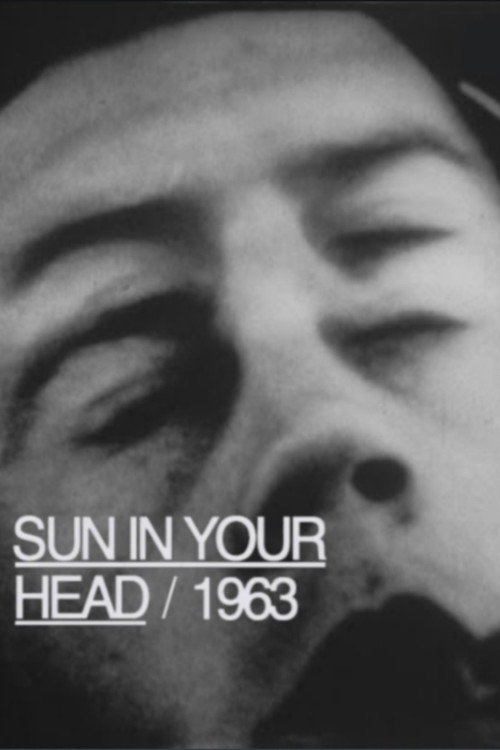
Sun in Your Head 1963
"Fluxfilm No. 23"
Sun in Your Head (1963) is a short experimental film that pushes the boundaries of traditional cinema through its fragmented visual language.
Director: Wolf Vostell
Frequently Asked Questions
What is Sun in Your Head (1963) about?
Sun in Your Head presents a series of fragmented television and film images that flow together in single-frame sequences. Airplanes, men, and women appear alongside text fragments like 'silence, genius at work' and 'ich liebe dich,' creating an abstract meditation on media and human experience.
Who directed Sun in Your Head?
Wolf Vostell directed Sun in Your Head (1963). He was a German artist associated with the Fluxus movement and known for his experimental approach to film and video art.
Who stars in Sun in Your Head?
The main cast for Sun in Your Head is not listed in available records.
Is Sun in Your Head (1963) worth watching?
For fans of experimental and avant-garde cinema, Sun in Your Head offers a compelling glimpse into 1960s artistic innovation. Its brief runtime and unconventional structure make it an intriguing historical artifact rather than conventional entertainment.
How long is Sun in Your Head?
Sun in Your Head runs for 7 minutes.
Sun in Your Head: Experimental Vision — Full Movie Info
Sun in Your Head (1963) is a short experimental film that pushes the boundaries of traditional cinema through its fragmented visual language. Directed by Wolf Vostell, this seven-minute piece presents single-frame sequences drawn from television and film sources, creating a staccato rhythm of imagery. The work features recurring motifs of airplanes, men, and women interspersed with provocative text overlays including phrases like 'silence, genius at work' and 'ich liebe dich.' These juxtapositions create a dreamlike meditation on media consumption and human connection.
The film's atmosphere is deliberately disorienting, with periodic distortions that warp and manipulate the original source material. This technique reflects the avant-garde spirit of the early 1960s art scene, particularly the Fluxus movement to which Vostell belonged. The end credits reveal its origins as 'Television décollage, Cologne, 1963,' suggesting a deliberate deconstruction of broadcast imagery. As Fluxfilm No. 23, it represents a bold artistic statement about the relationship between technology, communication, and consciousness. The brief runtime belies its powerful impact, making it a fascinating artifact for viewers interested in experimental cinema and media art.