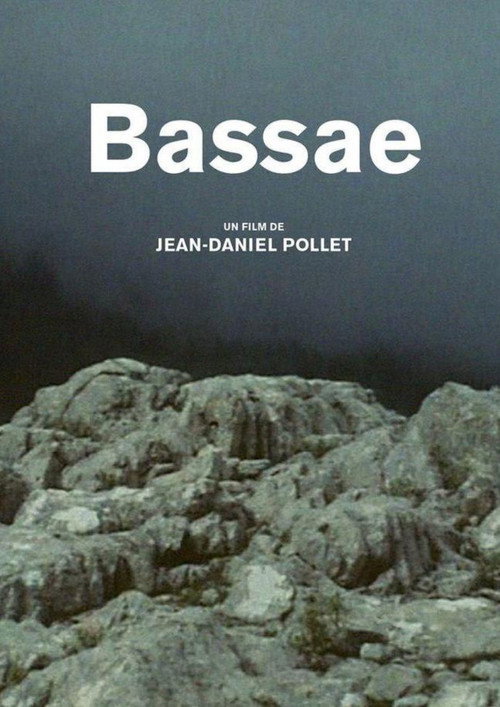
Bassae 1964
"Everything will return to mud again, to ashes. Nothing can withstand time. How could it?"
Bassae (1964) is a thought-provoking documentary that takes viewers on a journey to a lesser-known Greek temple. Director Jean-Daniel Pollet's unique perspective on the Bassae temple, located in a remote area of the Peloponnese, reveals the intricacies of this ancient structure.
Director: Jean-Daniel Pollet
Cast

Frequently Asked Questions
What is Bassae (1964) about?
This documentary follows director Jean-Daniel Pollet as he explores the Bassae temple, a lesser-known ancient Greek structure that offers a unique perspective on the transience of human creations.
Who directed Bassae?
The documentary was directed by Jean-Daniel Pollet, a French filmmaker known for his thought-provoking and visually striking documentaries.
Who stars in Bassae?
The film features Jean Négroni in a conversational role, guiding the viewer through the narrative.
Is Bassae (1964) worth watching?
While the documentary's brief runtime may not be substantial, its thought-provoking themes and atmospheric tone make it a compelling watch for those interested in history, culture, and the human experience.
How long is Bassae?
The documentary has a runtime of 9 minutes.
About Bassae (1964) — A poignant exploration of time and decay in ancient Greece.
Bassae (1964) is a thought-provoking documentary that takes viewers on a journey to a lesser-known Greek temple. Director Jean-Daniel Pollet's unique perspective on the Bassae temple, located in a remote area of the Peloponnese, reveals the intricacies of this ancient structure. The film's themes of time, decay, and the transience of human creations are woven throughout the narrative, inviting viewers to reflect on the impermanence of our achievements. As Pollet notes, this temple, unlike others, was not dedicated to a deity and stands as a testament to the ingenuity of ancient civilizations. The film's brief runtime belies its profound impact, making it a compelling watch for those interested in history, culture, and the human experience.
The documentary's atmospheric tone is set by the director's conversational style, which adds a sense of intimacy to the narrative. The film's use of location and the natural surroundings of the temple creates a sense of place, drawing the viewer into the world of ancient Greece. By exploring the Bassae temple, Pollet invites us to consider the significance of this often-overlooked structure and its place within the broader context of Greek history.