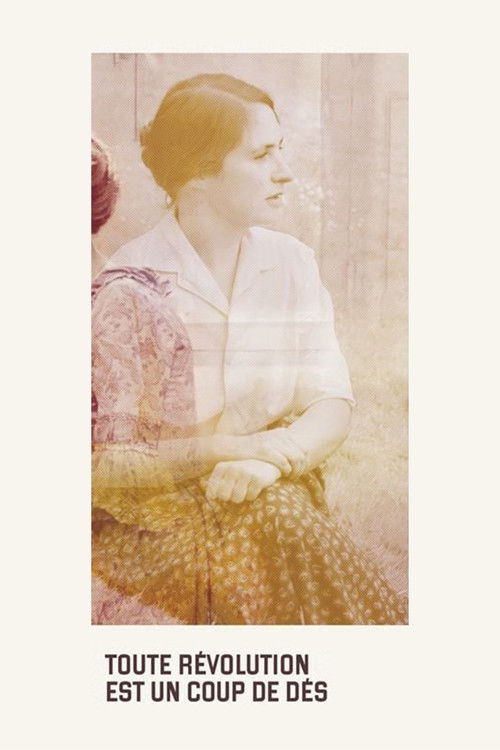
Every Revolution Is a Throw of the Dice 1977
Danièle Huillet's 1977 experimental short *Every Revolution Is a Throw of the Dice* invites viewers into a bold cinematic dialogue with Stéphane Mallarmé's final, enigmatic poem.
Director: Danièle Huillet
Cast
Frequently Asked Questions
What is Every Revolution Is a Throw of the Dice (1977) about?
This 11-minute experimental film pairs Danièle Huillet's cinematic vision with Stéphane Mallarmé's last published poem, *Un Coup de Dés Jamais N'Abolira le Hasard*. The project reimagines the poet's typographic innovations through visual and auditory experimentation, blending literary homage with political and artistic ambiguity.
Who directed Every Revolution Is a Throw of the Dice?
Danièle Huillet directed the film in 1977, bringing her distinctive approach to collaborative, politically engaged cinema to this avant-garde project.
Who stars in Every Revolution Is a Throw of the Dice?
The cast includes Helmut Färber, Michel Delahaye, Georges Goldfayn, Danièle Huillet herself, Manfred Blank, and Marilù Parolini, lending the project a mix of voices and perspectives.
Is Every Revolution Is a Throw of the Dice (1977) worth watching?
While the film is unrated on IMDb, its tight runtime and experimental nature make it a compelling watch for fans of avant-garde cinema and literary adaptations. Its fusion of poetry and visual art offers a unique, thought-provoking experience—though it may challenge viewers expecting conventional storytelling.
How long is Every Revolution Is a Throw of the Dice?
Every Revolution Is a Throw of the Dice runs for 11 minutes.
About Every Revolution Is a Throw of the Dice (1977) — Danièle Huillet's experimental tribute to Mallarmé's poetry and typographic revolution
Danièle Huillet's 1977 experimental short *Every Revolution Is a Throw of the Dice* invites viewers into a bold cinematic dialogue with Stéphane Mallarmé's final, enigmatic poem. The film pares Mallarmé's 1897 masterpiece—famously a typographic experiment in its own right—down to its essence, then reconstructs it through the lens of 1970s counterculture. Reciting Mallarmé's words with rhythmic precision, the movie weaves political and artistic ambiguity into a charged meditation on language, chance, and revolution. The result is a visually striking, cerebral experience that feels both timeless and urgently modern, where cinema itself becomes an act of interpretive rebellion.
Huillet's direction transforms Mallarmé's intricate verse into a hypnotic visual experiment, stripping away narrative convention to focus on sound, movement, and the raw power of text. The atmosphere oscillates between reverence and subversion, mirroring the poem's own tension between order and chaos. With a runtime of just 11 minutes, the film feels like a concentrated burst of creative energy, one that lingers long after the recitation ends. It's a rare work where poetry and cinema collide, challenging audiences to unravel its layers rather than simply consume them.