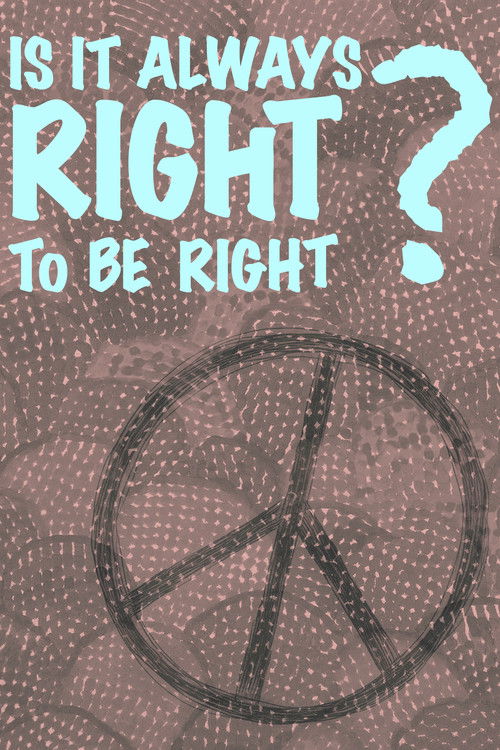
Is It Always Right to Be Right? 1970
In *Is It Always Right to Be Right? (1970)*, director Lee Mishkin crafts a sharp, eight-minute animated satire that dives headfirst into the absurdity of ideological division.
Director: Lee Mishkin
Cast

Frequently Asked Questions
What is *Is It Always Right to Be Right? (1970)* about?
This animated short delves into a world divided by rigid opinions, where every faction insists their stance is flawless. The story escalates as tensions rise, culminating in a challenge to the notion that only one side can ever be correct.
Who directed *Is It Always Right to Be Right? (1970)*?
The film was directed by Lee Mishkin, a filmmaker known for his work in animation.
Who stars in *Is It Always Right to Be Right? (1970)*?
The film features the voice talent of legendary actor Orson Welles, lending gravitas to its biting commentary.
Is *Is It Always Right to Be Right? (1970)* worth watching?
While its runtime is brief, this animated short packs a punch with its themes and sharp direction. Orson Welles' narration adds a layer of intrigue, making it a hidden gem for fans of social satire. Its unrated status leaves mystery, but the film's creativity speaks for itself.
How long is *Is It Always Right to Be Right? (1970)*?
The film runs for 8 minutes.
About Is It Always Right to Be Right? (1970) — A Sharp Animated Satire on Ideological Extremes
In *Is It Always Right to Be Right? (1970)*, director Lee Mishkin crafts a sharp, eight-minute animated satire that dives headfirst into the absurdity of ideological division. Set against a backdrop where every faction insists their perspective is the only correct one, the film explores how unyielding convictions can deepen societal rifts. The story unfolds with a mounting tension, as characters cling to their absolutist views, until a lone voice dares to question the very foundation of what it means to be "right." Through bold visuals and biting wit, Mishkin transforms a deceptively simple premise into a timeless commentary on polarization, compromise, and the cost of dogmatism.
The film's atmosphere crackles with tension, mirroring the frustration of a world where no middle ground seems possible. With its concise runtime and incisive storytelling, *Is It Always Right to Be Right?* stands as a testament to the power of animation as a medium for social critique. Whether you're drawn to its themes or its artistic boldness, this short film leaves a lasting impression—one that lingers long after the credits roll.