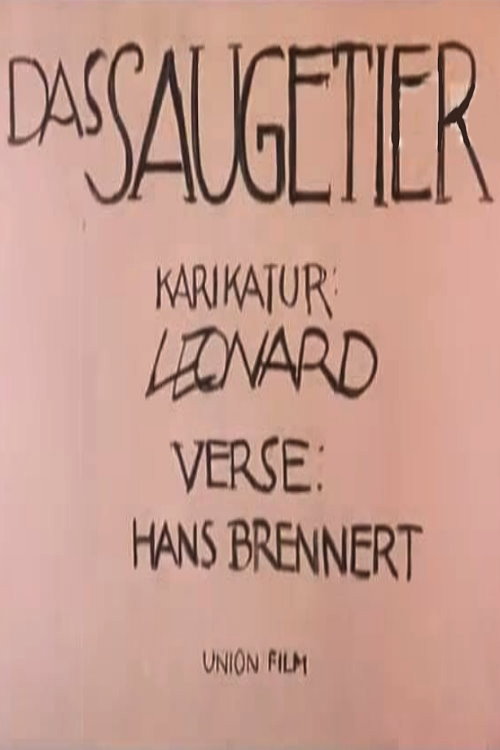
Das Säugetier 1917
Das Säugetier (1917) stands as a fascinating yet controversial entry in early animation history, blending propaganda with avant-garde artistry. Directed by Robert L.
Director: Robert L. Leonard
Frequently Asked Questions
What is Das Säugetier (1917) about?
This eight-minute German animated short uses political satire to mock British colonial expansion in Africa and Asia. The film personifies Britain as a monstrous giant squid whose tentacles stretch across the globe, only to face retaliation from German submarines, aircraft, and airships in a symbolic clash of empires.
Who directed Das Säugetier?
Director information is not available.
Who stars in Das Säugetier?
Cast details for Das Säugetier (1917) are not listed, leaving its performers a historical mystery.
Is Das Säugetier (1917) worth watching?
With no IMDb rating and its niche, propaganda-driven premise, Das Säugetier (1917) is best approached as a historical curiosity rather than entertainment. Its value lies in its early animation techniques and as a relic of wartime propaganda, offering insight into the era's cinematic ambitions.
How long is Das Säugetier?
Das Säugetier runs for 8 minutes.
About Das Säugetier (1917) — When Animation Took on the British Empire
Das Säugetier (1917) stands as a fascinating yet controversial entry in early animation history, blending propaganda with avant-garde artistry. Directed by Robert L. Leonard, this eight-minute German animated short adopts a biting tone to critique British colonial ambitions across South Africa, Egypt, India, and Jamaica. The film's striking visual metaphor—a towering British figure transformed into a predatory giant squid—sends its tentacles sprawling across the globe, only to be countered by Germany's naval and aerial might in a dramatic showdown. More than a curiosity, this short reveals the raw political energy of early 20th-century cinema, where animation was wielded as a tool of ideology and satire.
Though obscure today, Das Säugetier offers a glimpse into the intersection of art and wartime messaging. Its animation style, though rudimentary by modern standards, carries a boldness that underscores the intensity of its themes. As a period piece, it captures the tensions of a world on the brink of change, where even the smallest films could carry outsized ideological weight.