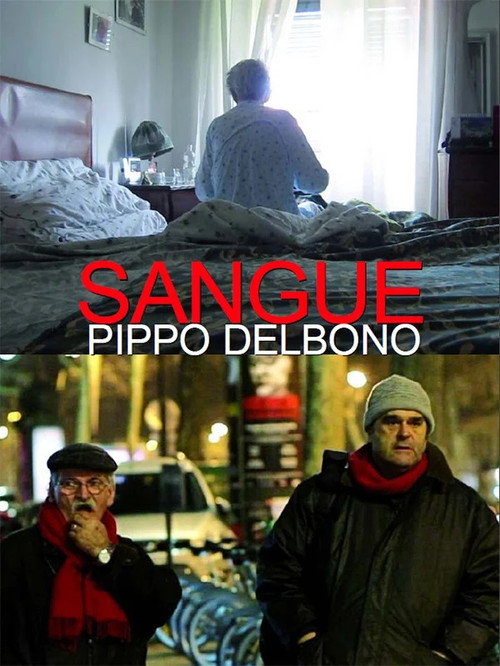
Sangue 2013
Sangue (2013) dives into a raw, deeply personal collision between past and present, politics and family. Directed by Pippo Delbono, the film blends drama and documentary elements to explore the fractured ideals of revolution and the haunting weight of history.
Director: Pippo Delbono
Cast
Frequently Asked Questions
What is Sangue (2013) about?
Sangue follows filmmaker Pippo Delbono and Giovanni Senzani, a former Red Brigades leader, as they revisit their turbulent past amid Italy's social decline. Their reunion takes an unexpected turn when Delbono must rush to his dying mother's side, a staunch Catholic who despised the very ideologies he once embraced. The film weaves personal and political threads into a poignant exploration of memory and reconciliation.
Who directed Sangue?
Sangue was directed by Pippo Delbono, an Italian filmmaker known for his boundary-pushing work that blends personal narrative with broader social commentary.
Who stars in Sangue?
The film stars Pippo Delbono alongside Anna Fenzi and Giovanni Senzani.
Is Sangue (2013) worth watching?
While Sangue (2013) may not be a mainstream hit, its raw emotional depth and historical resonance make it compelling for fans of thought-provoking documentaries. Its themes of family, ideology, and decay offer a unique perspective, though those seeking high-energy drama may find it slower paced.
How long is Sangue?
Sangue has a runtime of 92 minutes.
About Sangue (2013) — A Raw Fusion of Drama and Documentary on Ideals and Legacy
Sangue (2013) dives into a raw, deeply personal collision between past and present, politics and family. Directed by Pippo Delbono, the film blends drama and documentary elements to explore the fractured ideals of revolution and the haunting weight of history. Set in late 2011, it reunites Delbono with Giovanni Senzani, a former Red Brigades leader just released from prison, as they confront their shared legacy of violence and the fading dreams of a radical left. Their reunion becomes a meditation on Italy's crumbling social fabric, framed by the looming presence of death—both literal and existential.
Against this backdrop, Delbono rushes to his mother's side after she falls ill. A devout Catholic and former teacher, she embodies the conservative resistance to the very ideologies that once defined her son's world. The contrast between her beliefs and his past fuels the film's emotional core, weaving themes of guilt, memory, and the personal cost of ideological fervor into a quietly devastating narrative.