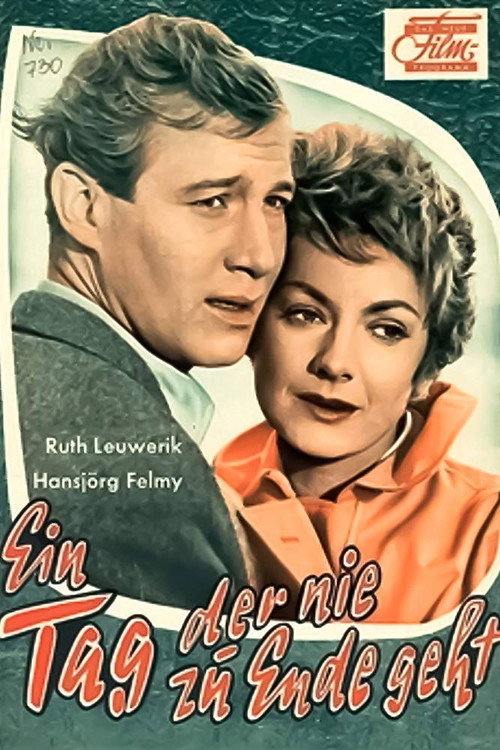
Ein Tag, der nie zu Ende geht 1959
Franz Peter Wirth's *Ein Tag, der nie zu Ende geht (1959)* weaves a poignant tale of love and loss set against the backdrop of post-war Germany.
Director: Franz Peter Wirth
Cast






Frequently Asked Questions
What is Ein Tag, der nie zu Ende geht (1959) about?
The film follows a tender yet strained romance unfolding over a single day in post-war Germany, where duty clashes with personal desires. Ruth Leuwerik and Hansjörg Felmy play characters bound by obligation but torn between love and sacrifice.
Who directed Ein Tag, der nie zu Ende geht?
Franz Peter Wirth directed the film, bringing a sensitive touch to the drama's emotional core.
Who stars in Ein Tag, der nie zu Ende geht?
The film features Ruth Leuwerik, Hansjörg Felmy, Hannes Messemer, Mady Rahl, and Karl Lieffen in pivotal roles.
Is Ein Tag, der nie zu Ende geht (1959) worth watching?
While it's a lesser-known title today, its themes of love and resilience in a turbulent era make it a compelling watch for fans of classic drama. The performances by Leuwerik and Felmy add depth to the storytelling.
How long is Ein Tag, der nie zu Ende geht?
Runtime details are not listed.
About Ein Tag, der nie zu Ende geht (1959) — A Forgotten Gem of Post-War German Romance and Drama
Franz Peter Wirth's *Ein Tag, der nie zu Ende geht (1959)* weaves a poignant tale of love and loss set against the backdrop of post-war Germany. At its heart lies a timeless romance between Ruth Leuwerik and Hansjörg Felmy, whose characters navigate the complexities of duty and personal longing. The film's melancholic yet tender atmosphere is heightened by Hannes Messemer's commanding presence, while Mady Rahl adds a touch of warmth to the emotional landscape. As a quintessential drama from the late 1950s, the movie explores themes of sacrifice and resilience, capturing the zeitgeist of an era defined by both hope and hardship.
Cinematic in its scope and deeply human in its storytelling, *Ein Tag, der nie zu Ende geht* immerses viewers in a world where every moment lingers like a memory. The delicate balance between romance and realism makes it a standout in German cinema of the period, offering a reflective glance at relationships tested by external pressures.