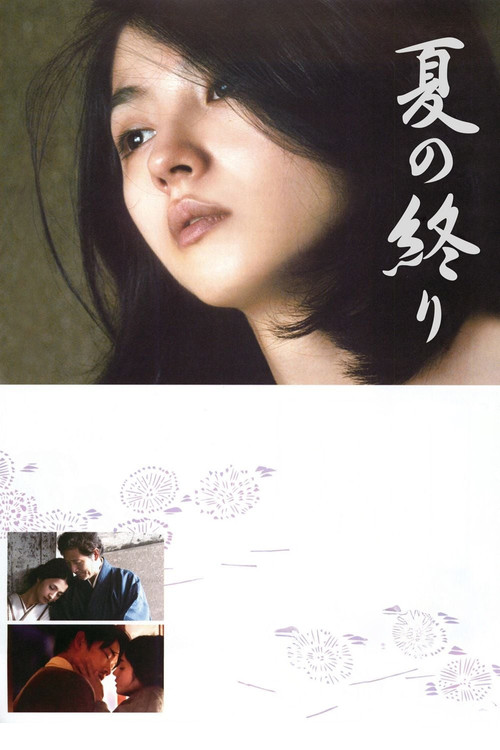
The End of Summer 2013
Directed by Kazuyoshi Kumakiri, *The End of Summer (2013)* immerses viewers in a poignant post-war Japan where societal shifts collide with personal longing.
Director: Kazuyoshi Kumakiri
Cast




Frequently Asked Questions
What is The End of Summer (2013) about?
*The End of Summer (2013)* follows Tomoko, a woman trapped in a stagnant affair with a married writer, Shingo, in 1950s Japan. Her world shifts when she enters a passionate but complicated romance with Ryota, a younger man who challenges her to confront her own desires. The film captures her struggle between safety and freedom, set against a society on the verge of transformation.
Who directed The End of Summer?
The End of Summer was directed by Kazuyoshi Kumakiri, known for his atmospheric dramas that explore complex human relationships and historical tensions.
Who stars in The End of Summer?
The film stars Hikari Mitsushima as Tomoko, alongside Kaoru Kobayashi, Go Ayano, and Yura Akanuma, with Satoko Abe and Mantaro Koichi rounding out the cast.
Is The End of Summer (2013) worth watching?
*The End of Summer (2013)* offers a compelling drama of love and liberation, though it leans more toward mood than action. Its emotional depth and historical setting make it a standout for fans of introspective romance, especially those interested in Japanese cinema's portrayal of post-war society.
How long is The End of Summer?
The End of Summer runs for 114 minutes, or just under two hours.
🎥 Trailer
About The End of Summer (2013) — A Forbidden Love Story in Post-War Japan
Directed by Kazuyoshi Kumakiri, *The End of Summer (2013)* immerses viewers in a poignant post-war Japan where societal shifts collide with personal longing. At its heart is a turbulent love triangle set against the backdrop of the late 1950s to early 1960s—a time of burgeoning creativity and stifled desires. Tomoko, the film's restless protagonist, finds herself torn between two men: Shingo, the brooding, unpublished writer she serves as mistress to, and Ryota, a younger, passionate figure who enters her life with reckless intensity. With sharp emotional undercurrents, Kumakiri crafts a drama that explores the cost of complacency, the allure of escape, and the fragile boundaries between freedom and entrapment.
As Tomoko's dissatisfaction with her stagnant existence grows, the film delves into themes of artistic yearning, forbidden passion, and the quiet desperation of those who refuse to conform. The lush cinematography and restrained performances amplify the tension, making *The End of Summer* a compelling meditation on love as both salvation and rebellion.