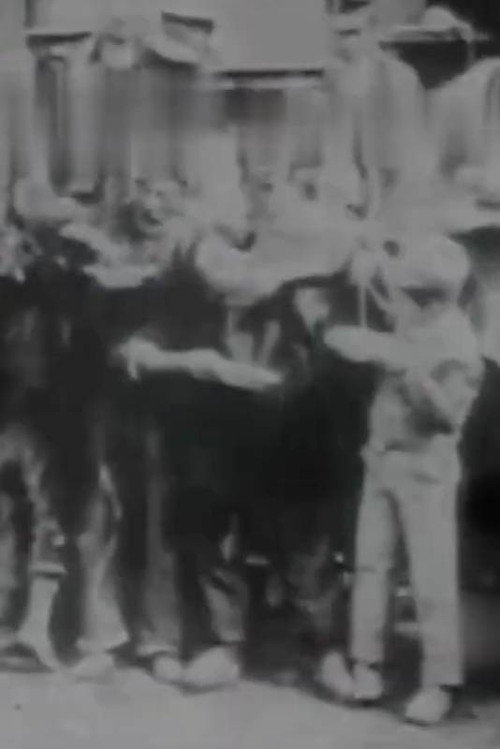
Eating Macaroni in the Streets of Naples 1903
Eating Macaroni in the Streets of Naples (1903) offers a fascinating glimpse into everyday life in early 20th century Naples, captured through the lens of pioneering documentary filmmaking.
Frequently Asked Questions
What is Eating Macaroni in the Streets of Naples (1903) about?
This early documentary follows a group of young boys eating spaghetti or macaroni while lined up against a street curb in Naples, Italy, with a brief moment when a small child runs through the scene before being pulled away.
Who directed Eating Macaroni in the Streets of Naples?
Director information is not available for this early 1903 production.
Who stars in Eating Macaroni in the Streets of Naples?
The cast consists of unidentified young boys and a small child appearing in this brief street scene documentary.
Is Eating Macaroni in the Streets of Naples (1903) worth watching?
For film historians and enthusiasts interested in early cinema, this unrated documentary provides valuable insight into the evolution of street-level documentary filmmaking, though its brief runtime limits conventional entertainment value.
How long is Eating Macaroni in the Streets of Naples?
Runtime details are not listed, though the film is approximately one minute in length.
Eating Macaroni in the Streets of Naples (1903) — Early Documentary Film
Eating Macaroni in the Streets of Naples (1903) offers a fascinating glimpse into everyday life in early 20th century Naples, captured through the lens of pioneering documentary filmmaking. This brief one-minute film showcases a group of young boys lined up along the street curb, enjoying a simple meal of spaghetti or macaroni with the unpretentious authenticity that would become a hallmark of direct cinema. The scene represents one of the earliest examples of street-level documentary filmmaking, preserving a moment of ordinary Italian street life for posterity.
Beyond its historical significance, this early documentary captures the raw spontaneity of children at play and the bustling atmosphere of Naples streets. The brief appearance of a small child running through the frame, only to be quickly pulled out of sight, adds an unexpected dynamic element to the otherwise static street scene. As an unrated production from the dawn of cinema, Eating Macaroni in the Streets of Naples (1903) serves as both a cultural artifact and a testament to the power of film as a medium for documenting human experience across different times and places.