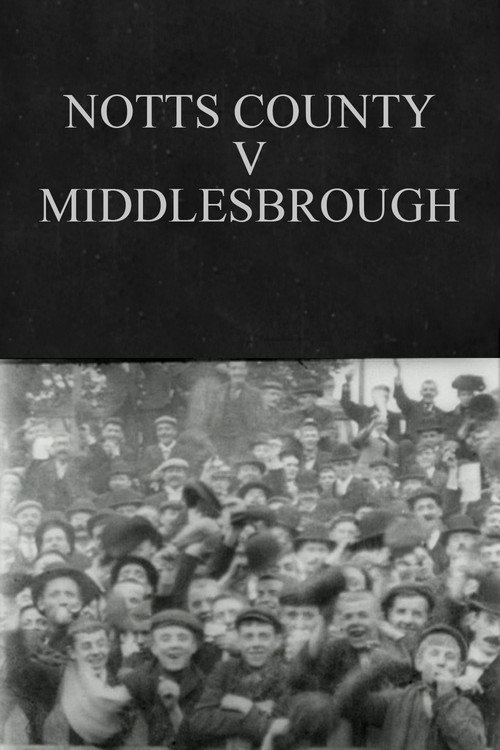
Notts County v. Middlesbrough 1902
Step back to the dawn of football cinema with the 1902 documentary short Notts County v. Middlesbrough, a remarkable seven-minute time capsule that freezes a historic First Division clash in amber.
Frequently Asked Questions
What is Notts County v. Middlesbrough (1902) about?
This 7-minute documentary captures the atmosphere of a historic First Division match at Trent Bridge, focusing on the cheering crowds rather than the on-pitch action. The camera pans through the terraces, showcasing the fashion, energy, and community spirit of Edwardian football fans.
Who directed Notts County v. Middlesbrough?
Director information is not available.
Who stars in Notts County v. Middlesbrough?
Cast details are not listed.
Is Notts County v. Middlesbrough (1902) worth watching?
Though unrated on IMDb, this short documentary is a fascinating historical curio for film and football enthusiasts. Its rarity, nostalgic charm, and glimpse into early sporting culture make it a compelling watch—especially for fans of vintage cinema and the evolution of football culture.
How long is Notts County v. Middlesbrough?
The film has a runtime of 7 minutes.
Notts County v. Middlesbrough (1902): A 7-Minute Window into Football's Edwardian Soul
Step back to the dawn of football cinema with the 1902 documentary short Notts County v. Middlesbrough, a remarkable seven-minute time capsule that freezes a historic First Division clash in amber. Shot at Trent Bridge, Notts County's home ground until 1910, the film isn't about the whistle or the scoreboard—it's a silent hymn to the roar of the terraces. Director unknown, cast unnamed, the picture lingers on the sea of flat caps, boaters, and billowing scarves that defined Edwardian match-day culture. In grainy black-and-white, the camera glides between expectant crowds and the emerald pitch, turning spectators into stars and the stadium into a living postcard of a bygone era. The result is a charming slice of sporting nostalgia that feels both intimate and epic, a moment where sport, art, and history blur into one.
While the match itself remains lost to time, this fragment survives as a cultural artifact—an early experiment in fandom on film. It's a snapshot of the raw, communal joy that football once embodied, long before replays and social media. The film's modest length belies its grand sense of place, capturing a community united by cheers rather than pixels. Today, it offers cinephiles and football historians alike a window into the sights, sounds, and sheer physicality of early 20th-century sporting life.