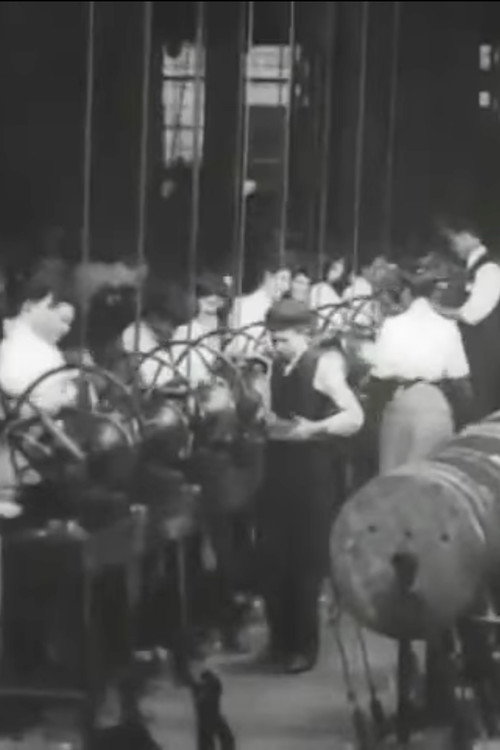
Coil Winding Machines 1904
Step back to the dawn of cinema with *Coil Winding Machines (1904)*, a revealing early documentary that offers a glimpse into the industrial heart of the 20th century.
Director: Billy Bitzer
Frequently Asked Questions
What is Coil Winding Machines (1904) about?
This short documentary offers a glimpse into early 20th-century industrial life, showing women operating coil winding machines in a factory setting. The film captures the precision and rhythm of manual labor during the mechanical age.
Who directed Coil Winding Machines?
Coil Winding Machines (1904) was directed by Billy Bitzer, a pioneering cinematographer known for his work with D.W. Griffith and his innovative contributions to early American cinema.
Who stars in Coil Winding Machines?
The film features a group of women workers operating coil winding machines, though the cast remains uncredited.
Is Coil Winding Machines (1904) worth watching?
While it's a brief two-minute glimpse into industrial history, *Coil Winding Machines (1904)* holds value for film historians and fans of early cinema. As a silent documentary, it's best appreciated as a historical artifact rather than a narrative experience.
How long is Coil Winding Machines?
Coil Winding Machines (1904) has a runtime of 2 minutes.
About Coil Winding Machines (1904) — The Silent Power of Early Industrial Film
Step back to the dawn of cinema with *Coil Winding Machines (1904)*, a revealing early documentary that offers a glimpse into the industrial heart of the 20th century. Directed by the visionary Billy Bitzer, this two-minute silent short captures rows of women diligently operating winding machines, their hands moving in rhythmic precision as they transform material from towering spools. The atmosphere is one of focused industry, where every motion speaks to the era's burgeoning mechanical age. Shot in stark black-and-white, it's a snapshot of labor and machinery that predates modern filmmaking techniques, yet still conveys the relentless pace of early factory life.
Bitzer's direction transforms what could have been a simple documentation of work into a visual study of industrial rhythm and human endurance. While the cast remains uncredited, the women's collective presence—guided by an unseen male supervisor—creates a sense of order and purpose. *Coil Winding Machines (1904)* isn't just a relic of film history; it's a testament to the power of early cinema as a tool for observation and reflection on the changing world of work.