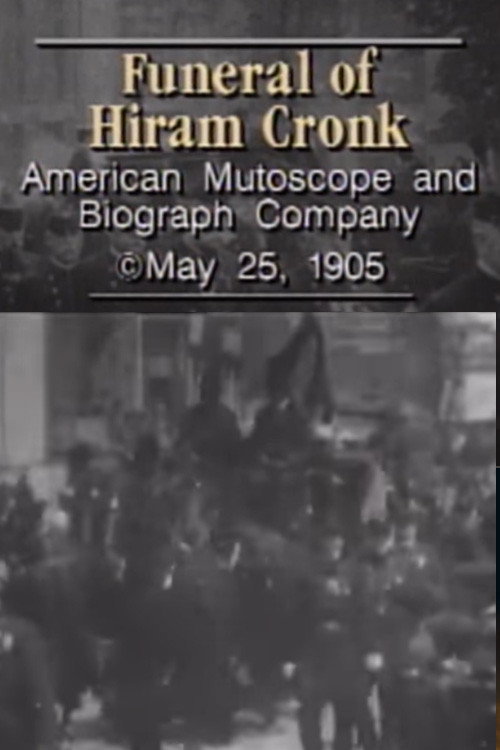
Funeral of Hiram Cronk 1905
Step back in time to 1905 with *Funeral of Hiram Cronk (1905)*, a rare documentary glimpse into one of America's most historic farewells.
Frequently Asked Questions
What is *Funeral of Hiram Cronk (1905)* about?
This early documentary records the funeral procession and military parade in honor of Hiram Cronk, the oldest surviving veteran of the War of 1812 at the time of his death. Filmed in New York City, it captures a rare moment of national reflection on a man whose life bridged two centuries of American history.
Who directed *Funeral of Hiram Cronk*?
Director information for *Funeral of Hiram Cronk (1905)* is not available.
Who stars in *Funeral of Hiram Cronk*?
Cast details for *Funeral of Hiram Cronk (1905)* are not listed.
Is *Funeral of Hiram Cronk (1905)* worth watching?
As a historical document, *Funeral of Hiram Cronk (1905)* offers a unique window into early 20th-century mourning customs and wartime legacy. While it lacks modern cinematic polish, its cultural and historical value makes it a compelling watch for history buffs and silent film enthusiasts.
How long is *Funeral of Hiram Cronk*?
The runtime of *Funeral of Hiram Cronk (1905)* is 4 minutes.
🎥 Trailer
About Funeral of Hiram Cronk (1905) — Witness the historic funeral of America's last War of 1812 veteran
Step back in time to 1905 with *Funeral of Hiram Cronk (1905)*, a rare documentary glimpse into one of America's most historic farewells. This short silent film captures the solemn military procession and public tribute honoring Hiram Cronk, the last surviving veteran of the War of 1812, as his funeral parade moves through New York City. The grainy black-and-white footage, stately in its simplicity, carries the weight of history, with marching soldiers and dignified crowds paying respects to a man whose life spanned nearly a century of war, peace, and national memory. Though modest in length, its emotional resonance lies in the quiet dignity of a nation remembering its oldest defender.
As both a historical artifact and a poignant reflection on legacy, this early 20th-century documentary offers more than just archival interest—it invites viewers to ponder themes of service, time, and collective memory. The film's atmosphere is somber yet dignified, a fitting farewell to a soldier whose final march became a living link to America's earliest conflicts.