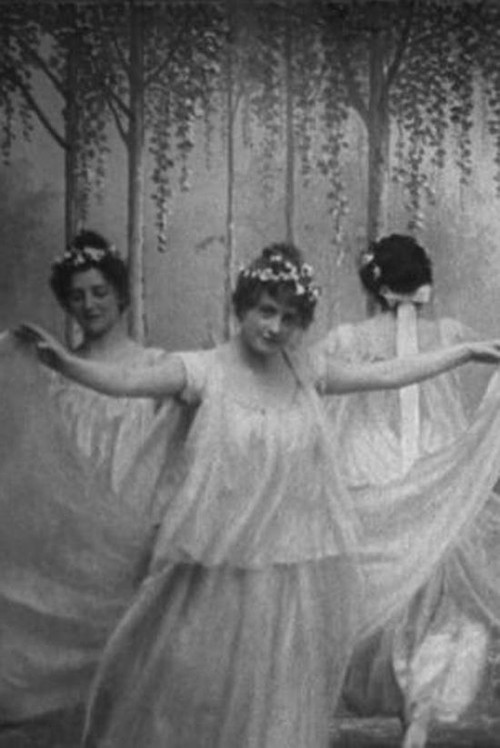
Orpheus and Eurydice 1906
Orpheus and Eurydice (1906) offers a mesmerizing glimpse into classical ballet immortalized on early cinema.
Director: Peter Elfelt
Frequently Asked Questions
What is Orpheus and Eurydice (1906) about?
This short documentary brings to life the tragic myth of Orpheus, who ventures into the underworld to rescue his beloved Eurydice. The film captures a 1762 opera's choreography, performed by legendary Danish dancers in a haunting silent-era adaptation.
Who directed Orpheus and Eurydice?
Director information for Orpheus and Eurydice (1906) is not available.
Who stars in Orpheus and Eurydice?
The film features ballet stars Valborg Borchsenius, Ellen Price, Elisabeth Beck, and Anna Marie Agerholm in a historic performance.
Is Orpheus and Eurydice (1906) worth watching?
Though brief and unrated, this silent-era documentary offers a unique glimpse into early ballet and the myth of Orpheus. Its historic value and artistic merit make it a compelling watch for film and dance enthusiasts, even if expectations for narrative depth are modest.
How long is Orpheus and Eurydice?
Orpheus and Eurydice (1906) runs for just 2 minutes.
About Orpheus and Eurydice (1906) — Discover the silent-era ballet capturing Gluck's timeless myth
Orpheus and Eurydice (1906) offers a mesmerizing glimpse into classical ballet immortalized on early cinema. Directed by Peter Elfelt, this brief documentary captures a historic performance of Gluck's timeless opera, originally composed in 1762, with choreography by Hans Beck from 1896. The film unfolds like a fleeting dream, transporting viewers to a bygone era where dance and myth intertwine. Through the graceful movements of Valborg Borchsenius, Ellen Price, Elisabeth Beck, and Anna Marie Agerholm, the tragedy of Orpheus—his desperate quest to reclaim his lost love Eurydice from the underworld—comes alive in just two minutes of cinematic time. The atmosphere is one of delicate melancholy, blending artistry with the fragile beauty of early filmmaking. Though silent and short, the piece resonates with the emotional depth of its legendary source material, making it a fascinating artifact for lovers of dance and cinema history.
This cinematic relic stands as a testament to the enduring power of myth and performance, preserving a fleeting moment from the golden age of ballet. The dancers' poised expressions and fluid motions evoke the eternal struggle between love and loss, a theme that has captivated audiences for centuries. While the film's brevity limits narrative development, its visual poetry lingers, inviting viewers to reflect on the intersection of art and immortality. Orpheus and Eurydice (1906) may be brief, but its impact is anything but minor, offering a rare window into the cultural treasures of the past.