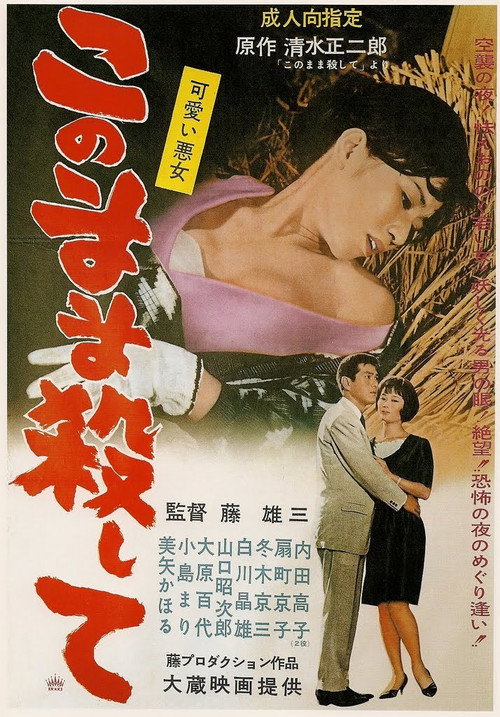
Kawaii akujo: Konomama koroshite 1965
Step into the neon-lit underworld of 1960s Tokyo with *Kawaii akujo: Konomama koroshite (1965)*, a gritty crime-drama that pulses with the raw energy of Japan's pink film movement.
Director: Yûzô Fuji
Cast




Frequently Asked Questions
What is Kawaii akujo: Konomama koroshite (1965) about?
This 1960s Japanese crime-drama delves into a world where allure masks danger, following a trio of complex characters whose fates become entangled in a web of deception and violence. The film explores how beauty and desire can become weapons in a brutal game of survival.
Who directed Kawaii akujo: Konomama koroshite?
Kawaii akujo: Konomama koroshite was directed by Yûzô Fuji, a filmmaker known for his contributions to Japan's vibrant pink film movement of the 1960s.
Who stars in Kawaii akujo: Konomama koroshite?
The film features standout performances from Takako Uchida, Kyōko Ōgimachi, and Kyōzō Fuyuki, who bring depth and intensity to their morally ambiguous roles.
Is Kawaii akujo: Konomama koroshite (1965) worth watching?
While it may not be widely known, *Kawaii akujo: Konomama koroshite* offers a fascinating glimpse into the pink film genre and 1960s Japanese noir. Its tight runtime and atmospheric storytelling make it a cult-worthy pick for fans of vintage crime dramas and offbeat cinema.
How long is Kawaii akujo: Konomama koroshite?
Kawaii akujo: Konomama koroshite runs for 71 minutes.
About Kawaii akujo: Konomama koroshite (1965) — A 1960s Japanese noir steeped in crime and forbidden desire
Step into the neon-lit underworld of 1960s Tokyo with *Kawaii akujo: Konomama koroshite (1965)*, a gritty crime-drama that pulses with the raw energy of Japan's pink film movement. Directed by the visionary Yûzô Fuji, this 71-minute noir unfolds in a world where innocence and corruption blur, guided by a magnetic trio of performers: Takako Uchida, Kyōko Ōgimachi, and Kyōzō Fuyuki. The film drenches viewers in a sultry atmosphere of moral ambiguity, where love and betrayal intertwine like shadows in an alleyway. At its heart, *Kawaii akujo: Konomama koroshite* explores the seductive danger of desire and the irreversible consequences of obsession, all wrapped in the stylish yet unsettling aesthetic of the era's underground cinema.
Fuji's direction crafts a tense, voyeuristic experience, blending stark realism with the exaggerated emotional beats characteristic of pink film. The story's themes of power, survival, and the cost of passion resonate through the performances, which crackle with intensity beneath the soft veneer of beauty. With its tight runtime and unflinching gaze, this forgotten gem offers a compelling snapshot of Japan's cinematic rebellion, appealing to fans of vintage noir and those eager to uncover hidden treasures from the 1960s.