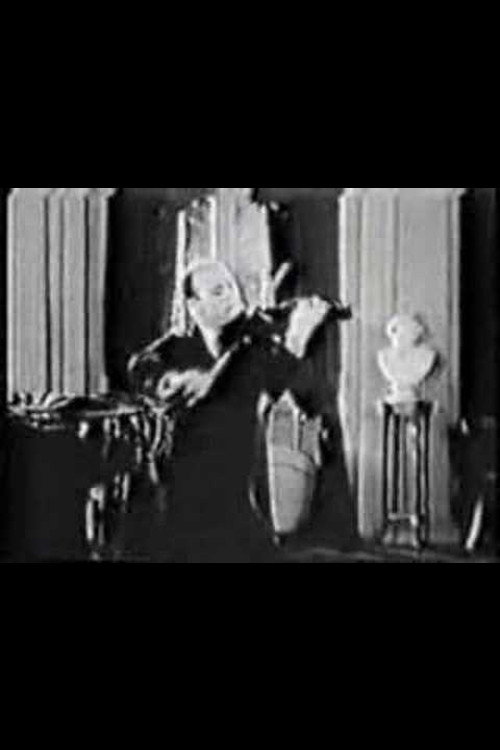
Mischa Elman 1926
Mischa Elman (1926) captures the legendary violin virtuoso in an intimate seven-minute performance that showcases two beloved classical pieces.
Cast
Frequently Asked Questions
What is Mischa Elman (1926) about?
This short film features violinist Mischa Elman performing two classical pieces: Dvorák's 'Humoresque' and Gossec's 'Gavotte.' The entire film consists of a single continuous shot focusing on Elman's skilled performance, accompanied by pianist Josef Bonime.
Who directed Mischa Elman?
Director information is not available.
Who stars in Mischa Elman?
The film stars violinist Mischa Elman and pianist Josef Bonime, who accompanies him off-screen.
Is Mischa Elman (1926) worth watching?
For classical music enthusiasts, this seven-minute performance is definitely worth watching. While unrated on IMDb, it offers a rare glimpse of a master violinist at work, making it valuable for music history buffs.
How long is Mischa Elman?
The film runs for 7 minutes.
About Mischa Elman (1926) — Classical Violin Performance Short Film
Mischa Elman (1926) captures the legendary violin virtuoso in an intimate seven-minute performance that showcases two beloved classical pieces. Filmed in a single continuous shot, this rare musical short presents Elman performing Antonín Dvorák's 'Humoresque' and François-Joseph Gossec's 'Gavotte' with elegant precision. The stationary camera focuses entirely on the violinist, creating an immersive experience that places the viewer directly in the concert hall. Accompanied off-screen by pianist Josef Bonime, whose instrument appears in the background, the film preserves a moment of pure musical artistry from the golden age of classical performance.
This brief but captivating musical piece offers audiences a front-row seat to Elman's masterful technique and expressive interpretation. The straightforward presentation style, typical of early sound-era short films, allows the music to speak for itself without distraction. Music enthusiasts and historians alike will appreciate this historical document of one of the 20th century's most celebrated violinists performing at his peak. The film's concise runtime makes it an accessible glimpse into classical music performance traditions of the 1920s.