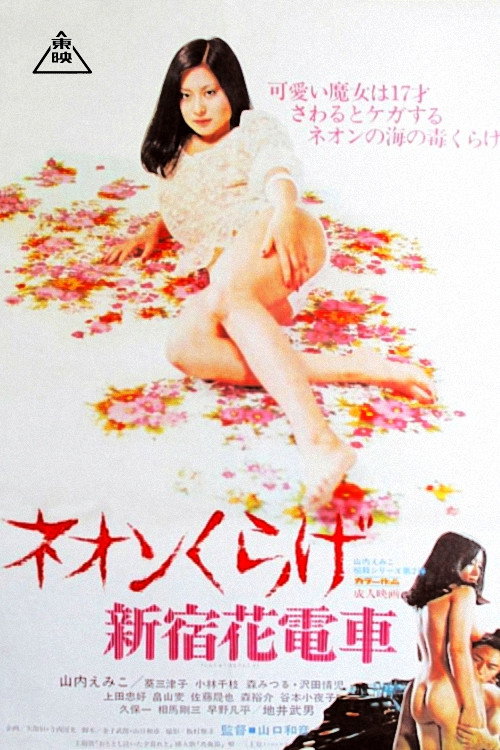
Neon Jellyfish: Shinjuku Flower Streetcar 1973
Directed by the gritty visionary Kazuhiko Yamaguchi, *Neon Jellyfish: Shinjuku Flower Streetcar* (1973) plunges viewers into the neon-drenched underbelly of 1970s Tokyo.
Director: Kazuhiko Yamaguchi
Cast

Frequently Asked Questions
What is Neon Jellyfish: Shinjuku Flower Streetcar (1973) about?
This gritty 1973 drama follows Emiko Yamauchi, a young girl from the countryside whose arrival in Tokyo exposes her to exploitation and hardship. As she navigates a seedy bar in Shinjuku, her relationship with a motorcycle racer offers fleeting hope, but the film's tone remains starkly realistic.
Who directed Neon Jellyfish: Shinjuku Flower Streetcar?
The film was directed by Kazuhiko Yamaguchi, known for his unflinching portrayals of urban life and social struggles.
Who stars in Neon Jellyfish: Shinjuku Flower Streetcar?
The cast includes Emiko Yamauchi, Mitsuko Aoi, Chie Kobayashi, Yūgo Sawada, and Mitsuru Mori.
Is Neon Jellyfish: Shinjuku Flower Streetcar (1973) worth watching?
If you appreciate raw, character-driven dramas that don't shy away from harsh themes, this film is worth tracking down. Its 72-minute runtime packs a punch, though its bleak tone may not appeal to everyone.
How long is Neon Jellyfish: Shinjuku Flower Streetcar?
The film runs for 72 minutes.
About Neon Jellyfish: Shinjuku Flower Streetcar (1973) — A raw 1970s Tokyo drama of survival and shattered dreams
Directed by the gritty visionary Kazuhiko Yamaguchi, *Neon Jellyfish: Shinjuku Flower Streetcar* (1973) plunges viewers into the neon-drenched underbelly of 1970s Tokyo. This raw urban drama follows Emiko Yamauchi, a sheltered 17-year-old from the countryside whose innocence shatters upon arrival in Shinjuku, where she's drawn into a world of exploitation and survival. The film masterfully contrasts the city's dazzling facade with its harsh realities, as Emiko navigates a job at a seedy girlie bar run by Mitsuko Mori, under the watchful eye of its scheming manager. Her tentative romance with Seiji Sawada, a determined motorcycle racer, offers fleeting hope amid the chaos, but the film's tone remains relentlessly bleak and unflinching.
Yamaguchi's direction infuses the story with a documentary-like urgency, capturing the desperation and resilience of its characters against a backdrop of urban decay. The themes of alienation, ambition, and the cost of dreams pulse through the narrative, making it a standout example of 1970s Japanese drama. With its stark visuals and emotionally charged performances, especially from Emiko Yamauchi and Mitsuko Aoi, the film lingers as a poignant exploration of youth lost to the city's unforgiving grind.