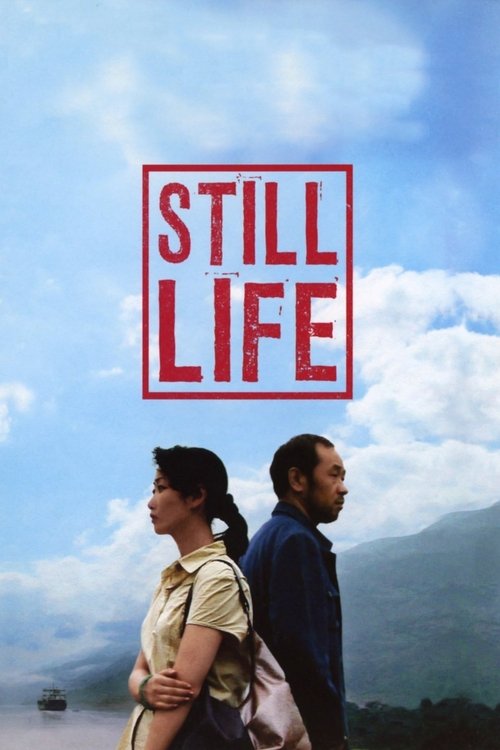
Still Life 2006
Still Life (2006) unfolds against the backdrop of Fengjie county's slow erasure, as towering cranes and rising waters reshape the landscape for the Three Gorges Dam.
Director: Jia Zhangke
Cast



Frequently Asked Questions
What is Still Life (2006) about?
Still Life (2006) follows two individuals as they search for estranged spouses in a town being dismantled for the Three Gorges Dam project. Their quiet quest becomes a window into the emotional toll of progress, revealing stories of love and separation amid physical decay.
Who directed Still Life?
Still Life was directed by Jia Zhangke, a master of Chinese independent cinema known for his intimate, socially conscious storytelling.
Who stars in Still Life?
The film stars Han Sanming, Zhao Tao, Wang Hongwei, and Zhubin Li, with each actor bringing depth to the film's themes of displacement and longing.
Is Still Life (2006) worth watching?
Still Life is a quietly powerful drama that rewards viewers with its authentic portrayal of societal change and human resilience. While not a mainstream spectacle, its poetic realism and emotional honesty make it a standout film for fans of thoughtful cinema.
How long is Still Life?
Still Life (2006) runs for 108 minutes, offering a compact yet immersive experience.
🎥 Trailer
Still Life (2006): A Poetic Drama of Displacement and Change — Full Movie Info
Still Life (2006) unfolds against the backdrop of Fengjie county's slow erasure, as towering cranes and rising waters reshape the landscape for the Three Gorges Dam. Directed by Jia Zhangke, this meditative drama follows two strangers—Han Sanming and Zhao Tao—each searching for estranged spouses amidst the town's crumbling facades and displaced lives. Their journey becomes a quiet ode to fading connections, set against the relentless march of progress.
With its documentary-like realism and understated heart, Still Life captures a moment of profound transition, where human stories linger like echoes in empty corridors. The film's muted palette and deliberate pacing mirror the emotional weight of displacement, making it a poignant exploration of love and loss in the face of irreversible change.