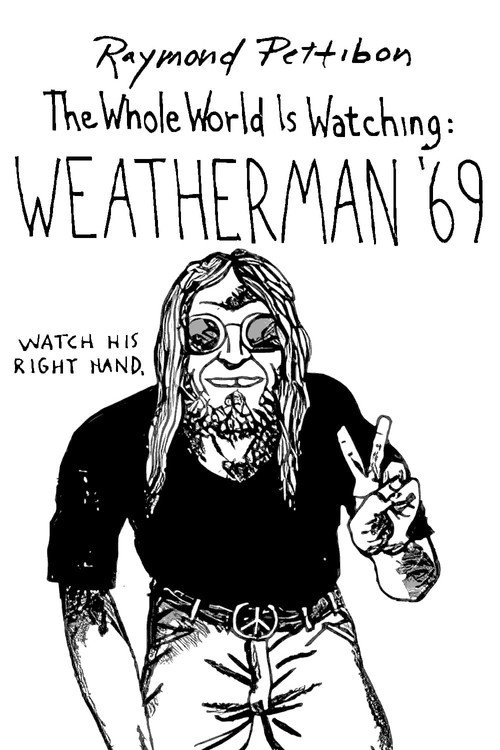
Weatherman '69 1989
"The Whole World is Watching"
Raymond Pettibon's 1989 cult curiosity *Weatherman '69* drops viewers into a deliberately shaky, hand-held time capsule of 1960s radical chic gone gloriously sloppy.
Director: Raymond Pettibon
Cast




Frequently Asked Questions
What is Weatherman '69 (1989) about?
This 120-minute underground film follows a loose collective of 1960s radicals as they stage protests, rehearse revolution, and debate ideology while stumbling through drug-fueled gatherings. Think *Medium Cool* meets *The Big Lebowski*—if Lebowski were a manifesto in progress.
Who directed Weatherman '69?
Raymond Pettibon, the influential artist and graphic designer, helmed this idiosyncratic feature.
Who stars in Weatherman '69?
The ensemble includes Sonic Youth's Kim Gordon and Thurston Moore, Minutemen's Mike Watt, and punk figure Joe Cole.
Is Weatherman '69 (1989) worth watching?
If you love raw, DIY filmmaking that doubles as cultural archaeology, it's a fascinating artifact. Its intentionally rough aesthetic and biting satire reward patience, though casual viewers may find its offhand style challenging to crack.
How long is Weatherman '69?
The film runs 120 minutes—exactly two hours of guerrilla-style counterculture immersion.
About Weatherman '69 (1989) — The 1960s counterculture as seen through a punk lens
Raymond Pettibon's 1989 cult curiosity *Weatherman '69* drops viewers into a deliberately shaky, hand-held time capsule of 1960s radical chic gone gloriously sloppy. Starring Sonic Youth's Kim Gordon and Thurston Moore, Minutemen bassist Mike Watt, and punk icon Joe Cole, this off-kilter pseudo-documentary tracks a commune of stoned revolutionaries as they rehearse revolution through rock anthems, hazy ideology, and self-mythologizing chaos. The grainy visuals, abrupt edits, and dry one-liners amplify the film's deadpan satire of countercultural posturing, blurring the line between homage and exposé.
Shot in the style of a bootleg VHS treasure, *Weatherman '69* radiates the raw nervosity of a moment when music and politics collided—and often imploded. Pettibon's guerrilla filmmaking lends the project an amateurism that feels intentional, capturing the era's mix of sincerity and absurdity. With its offhand dialogue and unpolished aesthetic, the movie becomes both eulogy and exposé for a generation chasing utopia through electric guitars and smoke-filled rooms.