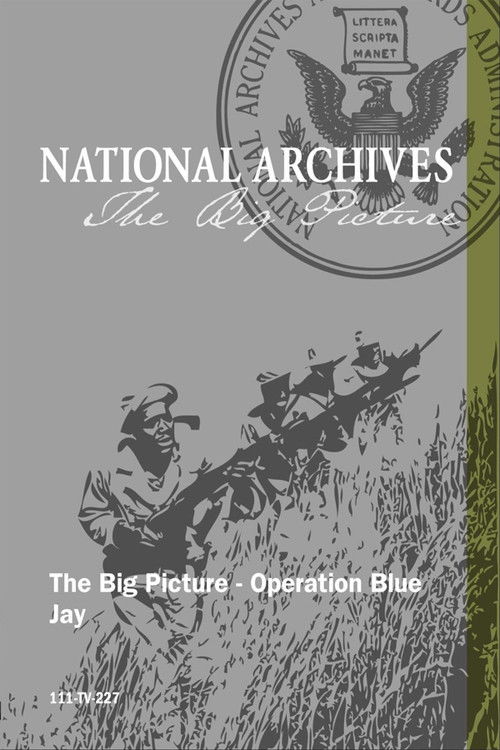
Operation Blue Jay 1953
Operation Blue Jay (1953) offers a fascinating glimpse into Cold War-era military logistics, chronicling the U.S. Signal Corps' ambitious effort to build a massive airbase in the remote and harsh environment of Thule, Greenland. Directed by Lester A.
Director: Lester A. Marks
Frequently Asked Questions
What is Operation Blue Jay (1953) about?
This documentary follows the U.S. Signal Corps as they construct a massive airbase in Thule, Greenland, during the early Cold War. The film captures the logistical hurdles, engineering feats, and sheer determination required to establish a critical military outpost in one of Earth's most inhospitable environments.
Who directed Operation Blue Jay?
Lester A. Marks directed Operation Blue Jay (1953), bringing a documentary approach that balances technical detail with human effort.
Who stars in Operation Blue Jay?
Cast details are not listed for Operation Blue Jay (1953), as it is a documentary focused on the U.S. Signal Corps' construction team rather than individual actors.
Is Operation Blue Jay (1953) worth watching?
While Operation Blue Jay (1953) may not be a cinematic blockbuster, it offers a unique historical perspective on Cold War logistics and Arctic engineering. Its 28-minute runtime makes it a quick but informative watch for history or military buffs interested in early Cold War infrastructure.
How long is Operation Blue Jay?
Operation Blue Jay (1953) runs for 28 minutes.
Operation Blue Jay: How the U.S. Built a Greenland Airbase in 1953
Operation Blue Jay (1953) offers a fascinating glimpse into Cold War-era military logistics, chronicling the U.S. Signal Corps' ambitious effort to build a massive airbase in the remote and harsh environment of Thule, Greenland. Directed by Lester A. Marks, this documentary unfolds with the precision of a military operation, capturing the scale of construction as thousands of workers, engineers, and soldiers tackle unforgiving Arctic conditions to erect a strategic outpost. The film blends technical documentation with a sense of urgency, highlighting themes of resilience, innovation, and the logistical marvels of early Cold War infrastructure. Shot in black-and-white, the atmosphere is stark yet compelling, mirroring the isolation and determination of those involved in the project.
Marks' documentary style transforms what could be a dry technical account into a compelling visual record, emphasizing the human effort behind the monumental task. Operation Blue Jay (1953) isn't just a historical footnote—it's a testament to human ingenuity in the face of nature's challenges, offering viewers a behind-the-scenes look at one of the era's most ambitious military undertakings.