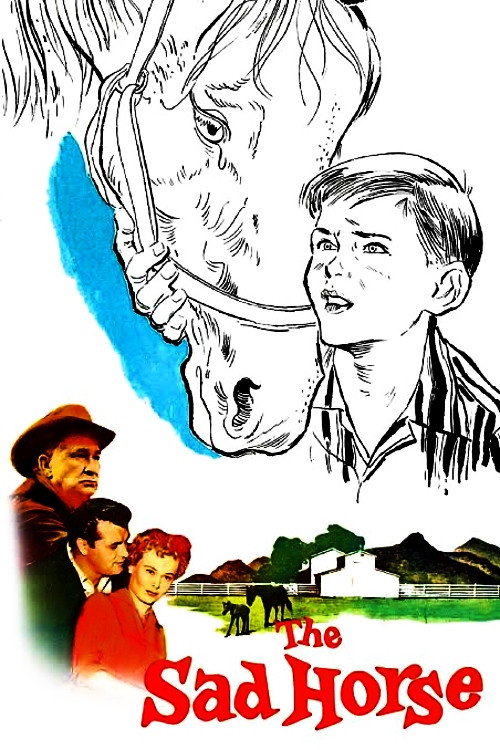
The Sad Horse 1959
"Pulitzer Prize Winner ZOE AKINS' Greatest Animal Story!"
In *The Sad Horse (1959)*, a heartfelt drama directed by James B. Clark, a young boy discovers solace and friendship in an unexpected place—a troubled horse.
Director: James B. Clark
Cast



Frequently Asked Questions
What is The Sad Horse (1959) about?
A young boy seeks companionship in a world that feels lonely, finding an unexpected friend in a troubled horse. Their growing bond teaches him about trust, patience, and the quiet strength of unconditional friendship.
Who directed The Sad Horse?
The film was directed by James B. Clark, known for his work in family and drama films of the era.
Who stars in The Sad Horse?
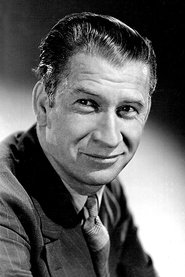
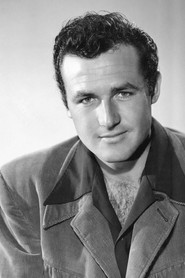
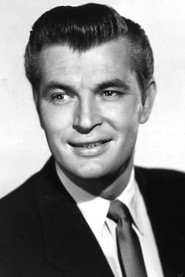
The cast includes David Ladd as the lead boy, alongside Chill Wills, Rex Reason, Patrice Wymore, and Gregg Palmer.
Is The Sad Horse (1959) worth watching?
While it doesn't carry an IMDb rating, its heartfelt story, strong performances, and classic family drama elements make it a worthwhile watch for fans of vintage animal-centric tales. The emotional core and nostalgic charm might just win you over.
How long is The Sad Horse?
The film runs for 77 minutes, a concise runtime perfect for a single sitting.
About The Sad Horse (1959) — A Heartwarming 1950s Animal Drama You Won't Forget
In *The Sad Horse (1959)*, a heartfelt drama directed by James B. Clark, a young boy discovers solace and friendship in an unexpected place—a troubled horse. Set against the backdrop of post-war America, this family-oriented story explores themes of loneliness, resilience, and the unspoken bond between humans and animals. With its gentle yet poignant narrative, the film captures the innocence of childhood and the quiet strength found in companionship. Shot with warmth and sincerity, Clark's direction brings out authentic performances, particularly from David Ladd in the lead role, making it a touching watch for audiences of all ages.
Combining drama and family values, *The Sad Horse* stands out as a nostalgic gem from the late '50s, offering a tender reminder of the healing power of connection. Its straightforward storytelling and emotional depth resonate long after the credits roll, making it a hidden treasure for classic film enthusiasts.