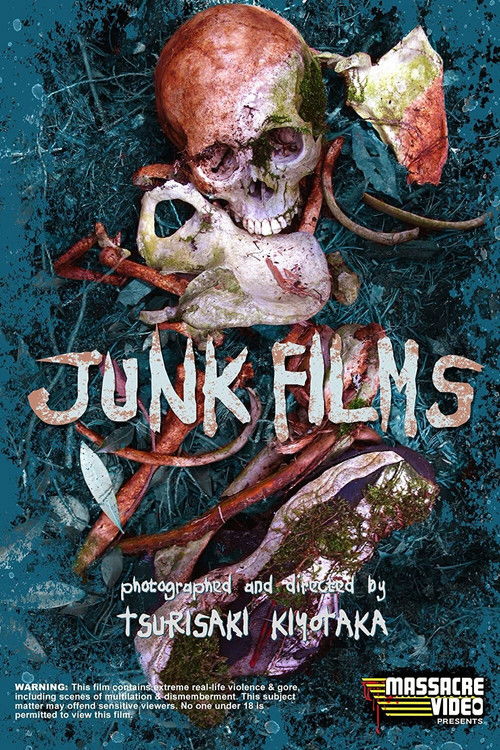
Junk Films 2007
Dive into the unsettling world of *Junk Films (2007)*, a haunting documentary by director Kiyotaka Tsurisaki that challenges viewers to confront death through a lens rarely seen on screen.
Director: Kiyotaka Tsurisaki
Frequently Asked Questions
What is Junk Films (2007) about?
*Junk Films* delves into the unsettling world of death photography through the lens of director Kiyotaka Tsurisaki, who turns his controversial career into a visceral documentary. Blending short films with candid interviews, the movie examines mortality as both a personal obsession and a societal taboo, unearthing raw emotions and legal battles along the way.
Who directed Junk Films?
Junk Films was directed by Kiyotaka Tsurisaki, a photographer whose work in death portraits has sparked significant controversy in Japan.
Who stars in Junk Films?
Director Kiyotaka Tsurisaki is the central figure in this documentary, with additional appearances by subjects of his death portraits and collaborators in the filmmaking process.
Is Junk Films (2007) worth watching?
*Junk Films* isn't for the faint of heart, but for those intrigued by documentary filmmaking that pushes boundaries, it's a gripping watch. The film's unflinching portrayal of death and its artistic interpretation offers a unique perspective rarely seen in cinema. While it lacks a traditional IMDb rating, its thematic depth makes it a standout in the documentary genre.
How long is Junk Films?
Junk Films has a runtime of 90 minutes.
🎥 Trailer
About Junk Films (2007) — A Controversial Documentary on Death and Artistry
Dive into the unsettling world of *Junk Films (2007)*, a haunting documentary by director Kiyotaka Tsurisaki that challenges viewers to confront death through a lens rarely seen on screen. This 90-minute visual essay follows Tsurisaki's controversial career as a photographer obsessed with capturing death—not as an abstract concept, but as a raw, unflinching reality. With over a thousand death portraits to his name and a history of legal battles in Japan, Tsurisaki's transition to filmmaking serves as a provocative exploration of mortality, art, and societal taboos. The documentary's eerie atmosphere lingers long after the credits roll, blending clinical detachment with visceral emotion.
*Junk Films (2007)* strips away the sanitized portrayals of death in mainstream media, replacing them with unfiltered, often disturbing imagery that forces audiences to grapple with their own mortality. Tsurisaki's work, both behind and in front of the camera, blurs the line between artist and voyeur, offering a perspective that is as thought-provoking as it is uncomfortable. The film's short-form structure amplifies its impact, each vignette serving as a stark reminder of life's fragility and the often-overlooked beauty in its final moments.