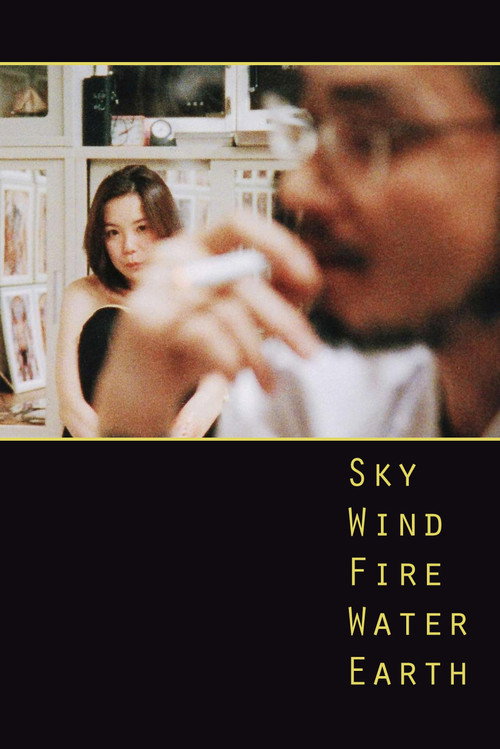
Sky, Wind, Fire, Water, Earth 2001
In *Sky, Wind, Fire, Water, Earth* (2001), acclaimed director Naomi Kawase embarks on a deeply personal journey to reconcile with the father she never knew, weaving a meditative tapestry of memory and loss.
Director: Naomi Kawase
Cast

Frequently Asked Questions
What is *Sky, Wind, Fire, Water, Earth* (2001) about?
Director Naomi Kawase explores her unresolved relationship with her late father in this meditative documentary, blending personal reflection with poetic imagery. The film follows her journey to understand his absence through nature, memory, and a symbolic act of connection—getting a tattoo like his.
Who directed *Sky, Wind, Fire, Water, Earth*?
Naomi Kawase, the celebrated Japanese filmmaker known for her intimate and autobiographical works.
Who stars in *Sky, Wind, Fire, Water, Earth*?
The film stars Naomi Kawase herself alongside her cousin Uno Kawase, with their real-life connection lending authenticity to the documentary.
Is *Sky, Wind, Fire, Water, Earth* (2001) worth watching?
For fans of poetic, introspective documentaries, this short film offers a moving exploration of grief and legacy. While its niche themes may not appeal to all, Kawase's signature style and emotional depth make it a quietly powerful experience worth discovering.
How long is *Sky, Wind, Fire, Water, Earth*?
The film runs for 49 minutes.
About Sky, Wind, Fire, Water, Earth (2001) — Naomi Kawase's Poetic documentary on grief and identity
In *Sky, Wind, Fire, Water, Earth* (2001), acclaimed director Naomi Kawase embarks on a deeply personal journey to reconcile with the father she never knew, weaving a meditative tapestry of memory and loss. This poetic documentary unfolds like a quiet introspection, blending intimate home footage with contemplative reflections on identity and legacy. Kawase's lens captures fleeting moments of nature and human connection, mirroring the film's title's elemental harmony, while her decision to get a tattoo like her father's becomes a symbolic bridge between past and present.
Blending autobiographical storytelling with documentary realism, the film immerses viewers in Kawase's emotional landscape, where grief and curiosity intertwine. The 49-minute runtime feels like a whispered confession, inviting audiences to ponder the fragility of family ties and the stories we leave behind. Shot in soft, natural hues, the visuals evoke a sense of timelessness, turning a personal exploration into a universal meditation on belonging.