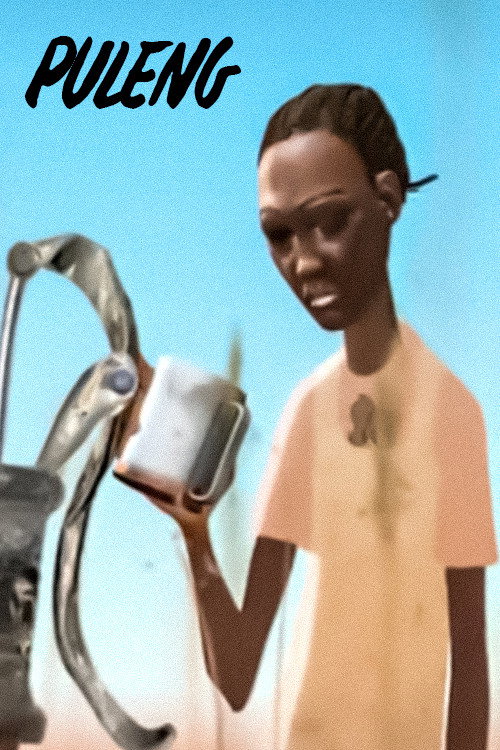
Puleng 2004
In the arid expanse of the Kalahari, a family farm teeters on collapse as months of unrelenting drought drain hope from the land and its people.
Director: Ali Taylor
Frequently Asked Questions
What is Puleng (2004) about?
Set on a drought-stricken Kalahari farm, Puleng (2004) follows a young girl as she contemplates risking her family's last seeds on a desperate gamble. Just as hope seems to fade, a mysterious figure appears on the horizon, offering a chance at salvation.
Who directed Puleng?
Puleng was directed by Ali Taylor, a filmmaker known for crafting concise, evocative stories that blend environmental themes with human emotion.
Who stars in Puleng?
Director information is not available for the cast details of Puleng (2004).
Is Puleng (2004) worth watching?
Though unrated on IMDb, Puleng (2004) stands out as a poignant three-minute animation that packs emotional weight into its brief runtime. Its themes of resilience and renewal resonate strongly, making it a hidden gem for fans of thoughtful, atmospheric storytelling.
How long is Puleng?
Puleng (2004) runs for approximately 3 minutes.
About Puleng (2004) — A Three-Minute Animation of Hope in the Kalahari Desert
In the arid expanse of the Kalahari, a family farm teeters on collapse as months of unrelenting drought drain hope from the land and its people. With the well bone-dry and their last seeds trembling in a child's hands, the farmers' daughter faces an impossible choice—risk everything on a desperate gamble or watch their fragile existence evaporate. Puleng (2004), a three-minute animation directed by Ali Taylor, transforms a stark environmental struggle into a visual parable of resilience and renewal.
As the horizon shimmers with the promise of salvation—a shape no one dares to name—the film distills human vulnerability and the quiet courage required to believe in second chances. Taylor's delicate animation breathes life into the barren landscape, turning silence into suspense and despair into a fragile flicker of possibility. Puleng (2004) is more than a story about rain; it's about the seeds we plant when all seems lost.