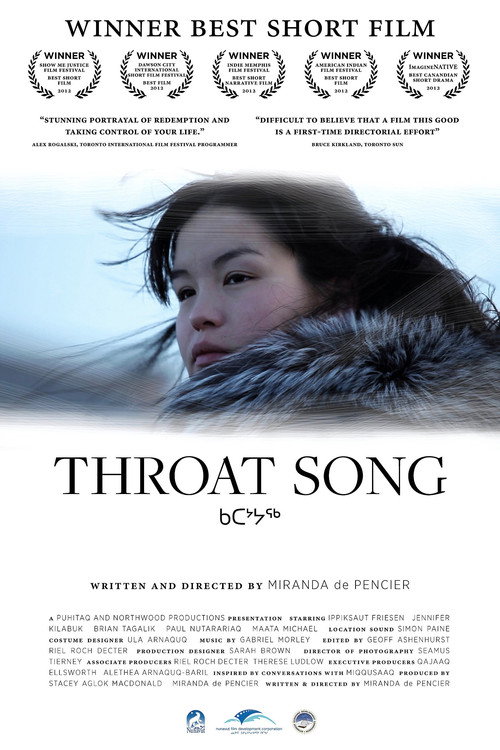
Throat Song 2011
Set in the stark, windswept landscape of a remote Canadian Arctic town, *Throat Song* (2011) weaves a poignant tale of resilience and recovery.
Director: Miranda de Pencier
Cast
Frequently Asked Questions
What is Throat Song (2011) about?
*Throat Song* (2011) tells the story of Ippik, a young Inuit woman trapped in an abusive relationship in a remote Arctic community. Her path to healing begins when she connects with other survivors of violence, learning to reclaim her voice and dignity through shared strength.
Who directed Throat Song?
Miranda de Pencier directed *Throat Song*. The film showcases her ability to capture deeply personal narratives within the vast, quiet landscapes of the Canadian Arctic.
Who stars in Throat Song?
The film features Ippiksaut Friesen, Maata Michael, Jennifer Kilabuk, Brian Tagalik, and Paul Nutarariaq in lead and supporting roles.
Is Throat Song (2011) worth watching?
Despite its short runtime, *Throat Song* offers a powerful and emotionally resonant story about resilience and community. While IMDb ratings are unavailable, its raw performances and urgent themes make it a compelling watch for fans of intimate, character-driven dramas.
How long is Throat Song?
The runtime for *Throat Song* is 15 minutes.
🎥 Trailer
About Throat Song (2011) — A 15-Minute Arctic Drama of Abuse and Redemption
Set in the stark, windswept landscape of a remote Canadian Arctic town, *Throat Song* (2011) weaves a poignant tale of resilience and recovery. Directed by Miranda de Pencier, this 15-minute drama follows Ippik, a young Inuit woman trapped in a cycle of abuse, whose journey toward healing begins when she finds solidarity among fellow survivors. The film captures the suffocating isolation of small-town life while exploring themes of reclaiming one's voice—both literally and metaphorically—amidst cultural and personal struggles.
With a raw, understated intensity, *Throat Song* blends quiet despair with the promise of empowerment, as Ippik's quiet strength emerges through newfound connections. The performances—led by Ippiksaut Friesen and Maata Michael—ground the story in authenticity, making it a compelling portrait of survival and collective healing. A thought-provoking short film that lingers long after the credits roll.