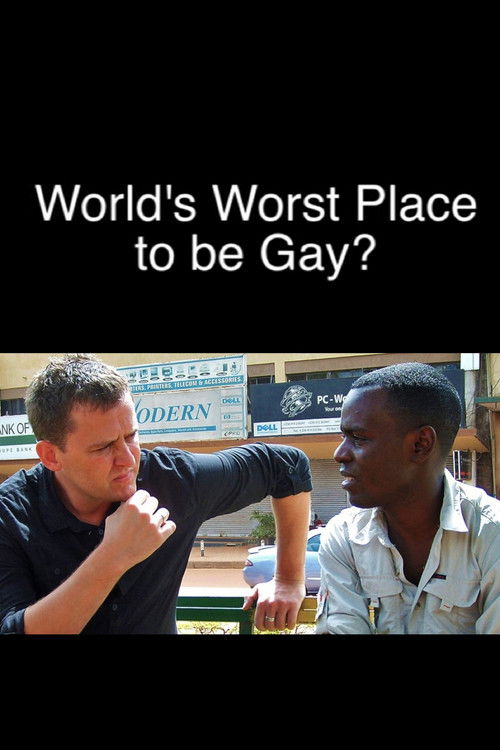
The World's Worst Place to Be Gay? 2011
In 2011, BBC Radio 1 DJ Scott Mills ventured into Uganda, a country where legislative debates threatened to impose the death penalty for homosexuality.
Director: Chris Alcock
Cast

Frequently Asked Questions
What is *The World's Worst Place to Be Gay?* (2011) about?
This documentary follows BBC Radio 1 DJ Scott Mills as he travels to Uganda, a country where the government considers introducing the death penalty for being gay. The film exposes the harsh realities faced by LGBTQ+ individuals under such oppressive legislation.
Who directed *The World's Worst Place to Be Gay??*
Chris Alcock directed this eye-opening documentary, blending investigative journalism with emotional storytelling.
Who stars in *The World's Worst Place to Be Gay??*
The documentary features BBC Radio 1 DJ Scott Mills as the central figure, alongside Ugandan activists and voices from the LGBTQ+ community.
Is *The World's Worst Place to Be Gay?* (2011) worth watching?
For those interested in social justice and human rights documentaries, this film is a must-watch. While it lacks an IMDb rating, its gripping narrative and urgent themes make it compelling and thought-provoking.
How long is *The World's Worst Place to Be Gay??*
The documentary runs for 58 minutes, offering a concise yet impactful exploration of its themes.
The World's Worst Place to Be Gay? (2011) — Scott Mills' Dangerous Journey into Uganda's Anti-Gay Climate
In 2011, BBC Radio 1 DJ Scott Mills ventured into Uganda, a country where legislative debates threatened to impose the death penalty for homosexuality. This gripping documentary, directed by Chris Alcock, immerses viewers in a society where persecution against LGBTQ+ individuals is not just rhetoric but a dangerous reality.
The film captures the stark contrast between Uganda's anti-gay laws and the lives of those fighting for basic human rights. Through raw interviews and on-the-ground footage, Mills confronts the architects of hatred while giving voice to the silenced and vulnerable. The atmosphere is tense, urgent, and deeply unsettling, making it a powerful exploration of intolerance and resilience.