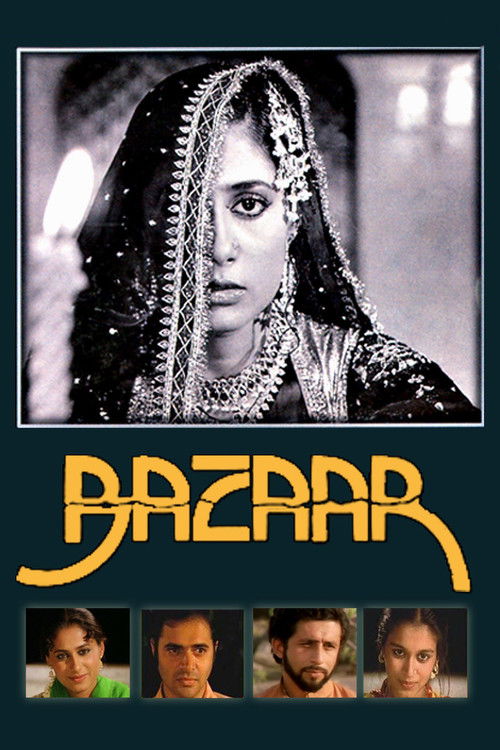
Bazaar 1982
Bazaar (1982), directed by Sagar Sarhadi, unfolds as a poignant drama set against Bombay's bustling mercantile circles in the late 20th century. At its heart lies Najma's quiet devotion to Salim Akhtar, a bond bound by societal expectations rather than romance.
Director: Sagar Sarhadi
Cast









Frequently Asked Questions
What is Bazaar (1982) about?
Bazaar (1982) follows Najma, who pines for Salim Akhtar but must wait until he's financially secure to marry him. When an elderly trader offers to help Salim start a business, he demands Najma find him a bride in return, setting off a chain of emotional and moral dilemmas.
Who directed Bazaar?
The film was directed by Sagar Sarhadi, a filmmaker known for his insightful dramas that explore human relationships and societal pressures.
Who stars in Bazaar?
The film features Smita Patil, Farooq Shaikh, Naseeruddin Shah, Supriya Pathak, and Bharat Kapoor in pivotal roles.
Is Bazaar (1982) worth watching?
Bazaar (1982) is a character-driven drama with strong performances and emotional depth, making it a rewarding watch for fans of classic Indian cinema. While not widely rated on IMDb, its themes of love and compromise resonate beyond its era.
How long is Bazaar?
Bazaar (1982) runs for 121 minutes, offering a tight, immersive experience.
About Bazaar (1982) — A tender drama of love, sacrifice, and the price of ambition
Bazaar (1982), directed by Sagar Sarhadi, unfolds as a poignant drama set against Bombay's bustling mercantile circles in the late 20th century. At its heart lies Najma's quiet devotion to Salim Akhtar, a bond bound by societal expectations rather than romance. When an elderly businessman, Shakir, offers to lift Salim from financial uncertainty, he does so with a calculated trade—Najma must find him a wife. What begins as a business pact soon spirals into moral and emotional territory, blurring the lines between desire, duty, and sacrifice.
With its rich atmosphere of leather markets and dimly lit drawing rooms, Bazaar (1982) masterfully explores themes of unrequited love, economic pressure, and the commodification of relationships. Smita Patil, Farooq Shaikh, and Naseeruddin Shah deliver layered performances that anchor a narrative as raw as it is reflective. Sarhadi's sensitive direction transforms a simple premise into a timeless commentary on love, compromise, and the cost of ambition.