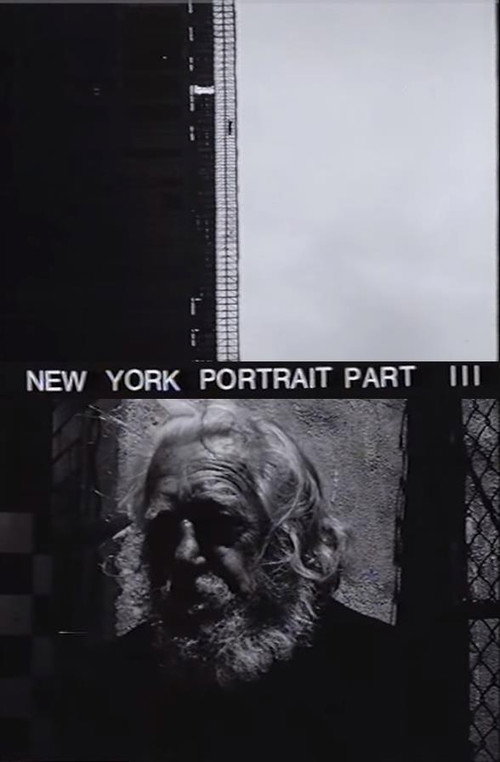
New York Portrait, Chapter III 1990
Peter Hutton's *New York Portrait, Chapter III* (1990) shifts from his celebrated rural landscapes to the urban jungle, weaving archival footage with a meditative gaze.
Director: Peter Hutton
Frequently Asked Questions
What is *New York Portrait, Chapter III* (1990) about?
Peter Hutton's short documentary revisits old footage of New York, blending urban landscapes with a nostalgic lens. Instead of capturing the city's present, it frames it as a time capsule—where nature and architecture collide in fleeting moments of beauty.
Who directed *New York Portrait, Chapter III*?
Director Peter Hutton, known for his meditative explorations of landscape and memory, helmed this urban-focused chapter of his *New York Portrait* series.
Who stars in *New York Portrait, Chapter III*?
Director information is not available.
Is *New York Portrait, Chapter III* (1990) worth watching?
As a 15-minute documentary with no IMDb rating, its appeal lies in Hutton's distinctive style and themes of urban nostalgia. Fans of slow cinema or his other works will find it rewarding, though it's more of a niche experience than mainstream entertainment.
How long is *New York Portrait, Chapter III*?
The film runs for 15 minutes.
About New York Portrait, Chapter III (1990) — Peter Hutton's Urban Memory in 15 Minutes
Peter Hutton's *New York Portrait, Chapter III* (1990) shifts from his celebrated rural landscapes to the urban jungle, weaving archival footage with a meditative gaze. Unlike his earlier New York films that captured the city's immediacy, this 15-minute documentary leans into the texture of memory, transforming old footage into a poetic reflection on time and place. Hutton's lens finds nature not just in Central Park's greenery but in the city's geometric rhythms—the play of light on skyscrapers, the quiet persistence of pigeons, the way concrete and sky blur into a single, breathing canvas. The result is a fleeting yet haunting portrait of a metropolis that feels both timeless and transitory, where every frame hums with the weight of forgotten stories.
This chapter stands apart in Hutton's oeuvre for its introspective pace, turning the familiar into something mysterious. The film's grainy, almost ghostly visuals evoke a New York that no longer exists, yet lingers in the city's DNA. It's a love letter to urban decay and resilience, where the past isn't just remembered but *felt*—in the angles of a fire escape, the shadows of a subway car, the way the wind bends traffic signs. For fans of slow cinema and urban explorers alike, it's a brief but unforgettable glimpse into how a filmmaker can make a city breathe.