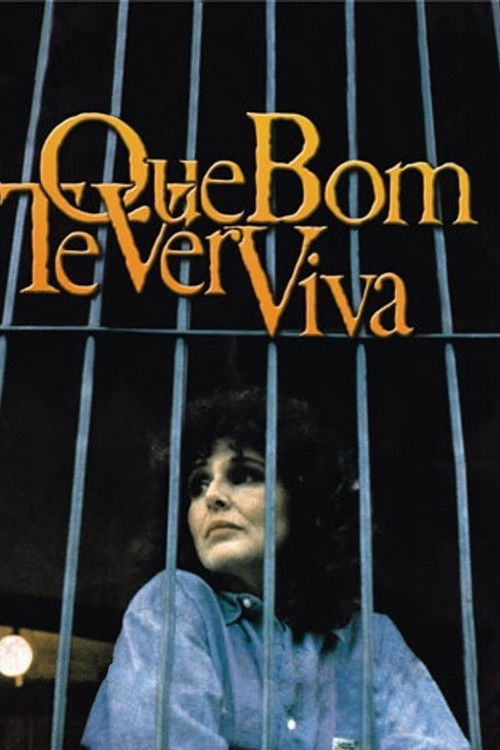
How Good to See You Alive 1989
How Good to See You Alive (1989), directed by Lúcia Murat, is a haunting blend of drama and documentary that confronts Brazil's dark era of military dictatorship.
Director: Lúcia Murat
Cast

Frequently Asked Questions
What is How Good to See You Alive (1989) about?
How Good to See You Alive (1989) is a powerful exploration of Brazil's military dictatorship through the eyes of eight women who survived political imprisonment. Using a mix of documentary-style interviews and fictional storytelling, the film contrasts the harsh realities of repression with the imaginative resilience of its characters.
Who directed How Good to See You Alive?
How Good to See You Alive was directed by Lúcia Murat, a filmmaker known for her work that blends personal narratives with historical and political themes.
Who stars in How Good to See You Alive?
The film features Irene Ravache in a central role, alongside Maria do Carmo Brito, Estrela Bohadana, Maria Luiza Garcia Rosa, and Rosalina Santa Cruz.
Is How Good to See You Alive (1989) worth watching?
For those interested in historical dramas that tackle heavy themes like political repression and resilience, How Good to See You Alive is a must-watch. Its unique blend of documentary and fiction offers a deeply moving and thought-provoking experience that lingers long after the credits roll.
How long is How Good to See You Alive?
How Good to See You Alive has a runtime of 110 minutes.
About How Good to See You Alive (1989) — A gripping blend of memory and fiction during Brazil's darkest years
How Good to See You Alive (1989), directed by Lúcia Murat, is a haunting blend of drama and documentary that confronts Brazil's dark era of military dictatorship. The film weaves together chilling testimonies from eight women who endured political imprisonment during the 1970s with the surreal imaginations of Irene Ravache's anonymous protagonist, creating a poignant mosaic of memory and resistance. Through its unique fusion of raw recollection and fictionalized storytelling, Murat crafts a deeply atmospheric meditation on survival, repression, and the indomitable spirit of those who refused to be silenced.
Against the backdrop of a country fractured by dictatorship, the movie captures the emotional and psychological toll of political oppression while celebrating the resilience of its characters. With a runtime of 110 minutes, it's a film that lingers in the mind, challenging viewers to reflect on the power of truth and the enduring scars of history. Perfect for fans of historical dramas and thought-provoking cinema, How Good to See You Alive stands as a testament to the human capacity for endurance in the face of unimaginable adversity.